Finding a crypto prop firm with no activation fee can help traders avoid additional costs after passing an evaluation and make the path to a funded account more predictable. While some firms require extra payments before granting funded access, others use a simpler pricing structure with no activation fee. This guide explains how no activation fee models work, what costs to compare, and what hidden fees traders should watch for.
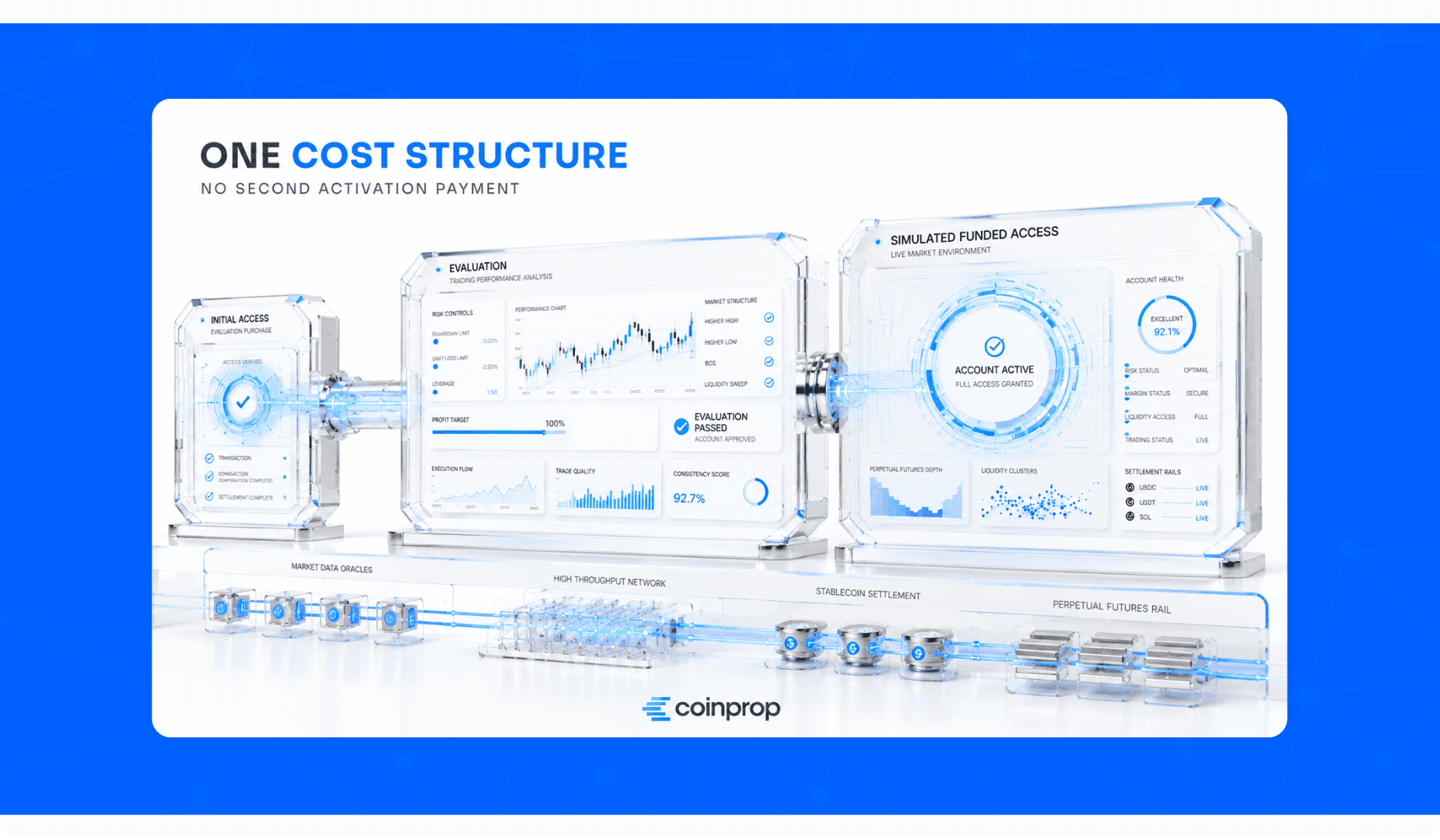
A no activation fee crypto prop firm is a company that does not require traders to make an additional payment after completing an evaluation and qualifying for a funded account. Instead of charging a separate activation cost before providing funded access, these firms allow traders to start using their funded account without this extra expense.
However, no activation fee does not always mean a completely free trading opportunity. Traders may still need to pay an evaluation fee or meet specific challenge requirements before receiving a funded account. Understanding how activation fees work helps traders compare the real cost of different crypto prop firms.
An activation fee is an additional charge that some crypto prop firms require after a trader successfully passes the evaluation phase. This payment is usually made before the trader receives access to a funded account.
For example, a trader may pay an initial challenge fee to complete an evaluation. After meeting the profit target and risk requirements, the firm may require another payment called an activation fee to activate the funded account.
This fee structure means the total cost of getting funded includes both the initial evaluation fee and the activation fee.
Activation fees are typically charged after a trader completes the evaluation and before the funded account becomes available. The purpose of this additional payment varies between firms.
Some prop firms use activation fees as part of their business model, while others use them to cover account setup, platform access, or operational costs associated with providing funded accounts.
Before choosing a crypto prop firm, traders should check whether a second payment is required after passing the challenge, as this can significantly affect the total cost of getting funded.
With a no activation fee model, traders do not need to pay an additional charge after passing the evaluation. Once they meet the firm's requirements, they can access their funded account without completing another payment step.
This pricing model provides more predictable costs because traders know their main expense before starting the challenge. However, they should still review other fees, including evaluation costs, resets, and withdrawal-related charges, to understand the complete pricing structure.
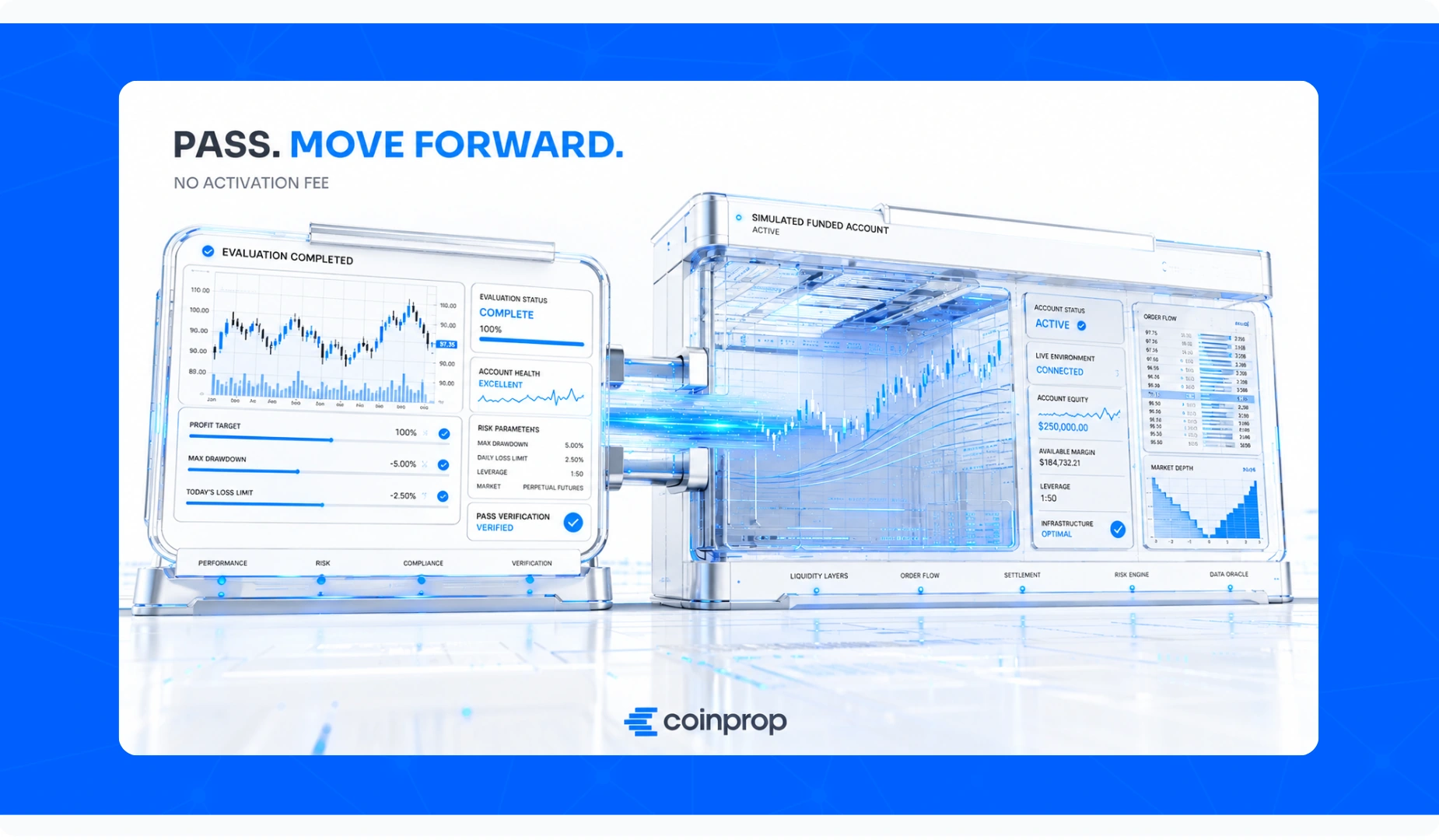
Crypto prop firms with no activation fees are becoming more attractive to traders because they remove an additional cost between passing an evaluation and receiving a funded account. Instead of paying another fee after proving their trading ability, traders can move directly to the funded stage without an extra financial commitment.
While pricing is only one factor when choosing a prop firm, avoiding activation fees can make the overall funding process simpler and more predictable.
One of the main advantages of a crypto prop firm with no activation fee is that traders do not need to make an additional payment after completing the evaluation.
In some models, traders pay an initial challenge fee and then face another charge before receiving their funded account. A no activation fee model removes this extra step, allowing successful traders to access funded capital without unexpected costs.
This makes the transition from evaluation to funded trading more straightforward.
An activation fee increases the total amount traders spend before accessing a funded account. Even if the initial challenge fee appears affordable, an additional activation payment can significantly change the real cost.
With no activation fees, traders can better estimate their total investment before starting a challenge. However, they should still consider other factors such as challenge fees, payout rules, profit splits, and trading conditions.
Transparent pricing helps traders understand exactly what they are paying for before joining a crypto prop firm.
A no activation fee structure removes one potential cost from the funding process and makes the pricing model easier to evaluate. Traders can compare firms based on their actual fees instead of discovering additional payments after passing the evaluation.
For new traders exploring crypto prop firms, avoiding activation fees can reduce the financial barrier to accessing funded accounts.
Instead of worrying about whether another payment will be required after success, traders can focus on meeting the evaluation rules and improving their trading performance.
However, a lower entry cost should always be balanced with factors such as risk limits, payout reliability, and trading conditions.
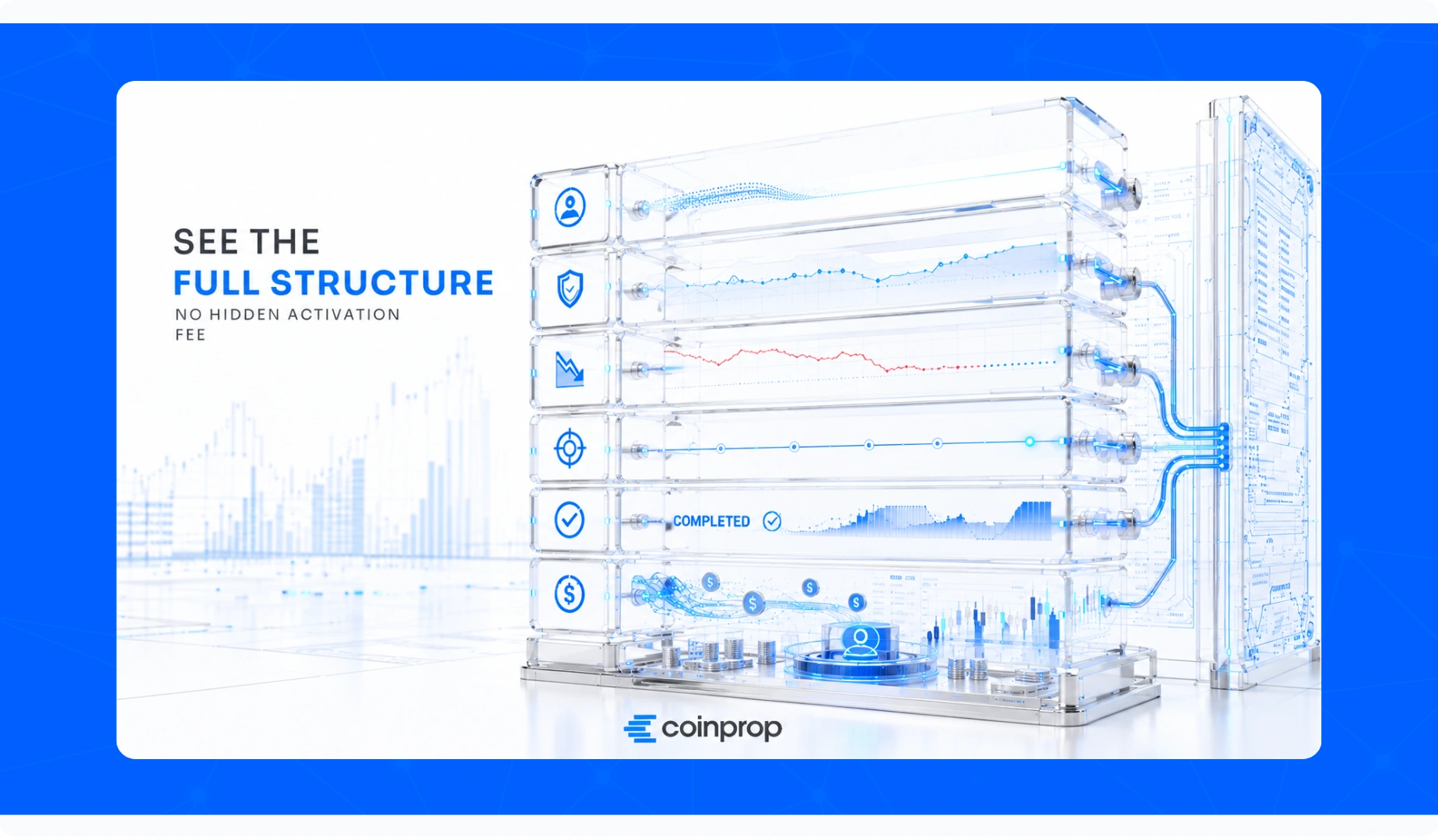
Finding a crypto prop firm with no activation fee requires more than checking whether a company advertises "no activation fee." Some firms may remove one cost while adding other charges elsewhere in their pricing structure.
Before purchasing a challenge, traders should review the complete fee model, understand the total cost of getting funded, and check whether any additional payments are required after passing the evaluation.
A low challenge fee does not always mean a lower overall cost. Some crypto prop firms may offer affordable evaluations but require additional payments before traders can access a funded account.
To compare different firms fairly, traders should consider the complete cost structure, including:
Looking at the total cost helps traders identify which crypto prop firms provide better value instead of choosing based only on the initial price.
Some crypto prop firms advertise very low challenge prices to attract traders, but the initial cost does not always represent the total cost of getting funded.
For example, a trader may see an offer for a large funded account at a very low price. However, after passing the evaluation, the trader may be required to pay an additional activation fee before receiving funded access.
This means the advertised challenge price and the actual cost of getting funded can be very different.
Traders looking for the most affordable options should also compare different cheapest crypto prop firms based on their complete fee structure and funding conditions.
Before choosing a crypto prop firm, traders should look beyond the initial offer and check whether additional payments are required after passing the challenge. A transparent pricing model should clearly explain all costs from the beginning.
One of the most important factors when choosing a no activation fee crypto prop firm is understanding what happens after passing the challenge.
Some firms require traders to complete an additional payment before receiving funded access. This means the advertised challenge price may not represent the actual cost of getting funded.
Before joining a prop firm, traders should confirm whether passing the evaluation leads directly to a funded account or requires another payment step.
A firm's fee policy should clearly explain all costs associated with its evaluation and funded account process.
Before purchasing a challenge, traders should review:
Clear pricing information helps traders avoid unexpected expenses and choose a crypto prop firm with a more transparent business model.
One example of a crypto prop firm without an activation fee is CoinProp. Unlike firms that require an additional payment after passing the evaluation, CoinProp allows qualified traders to access their funded account without paying an activation fee.
Fees are only one part of evaluating a crypto prop firm. Traders should also review payout rules, profit split terms, and account conditions before making a decision.
A transparent prop firm should clearly explain how traders earn payouts, when withdrawals are available, and what requirements must be met.
A no activation fee model becomes more valuable when combined with clear pricing, reasonable trading rules, and a reliable payout process.
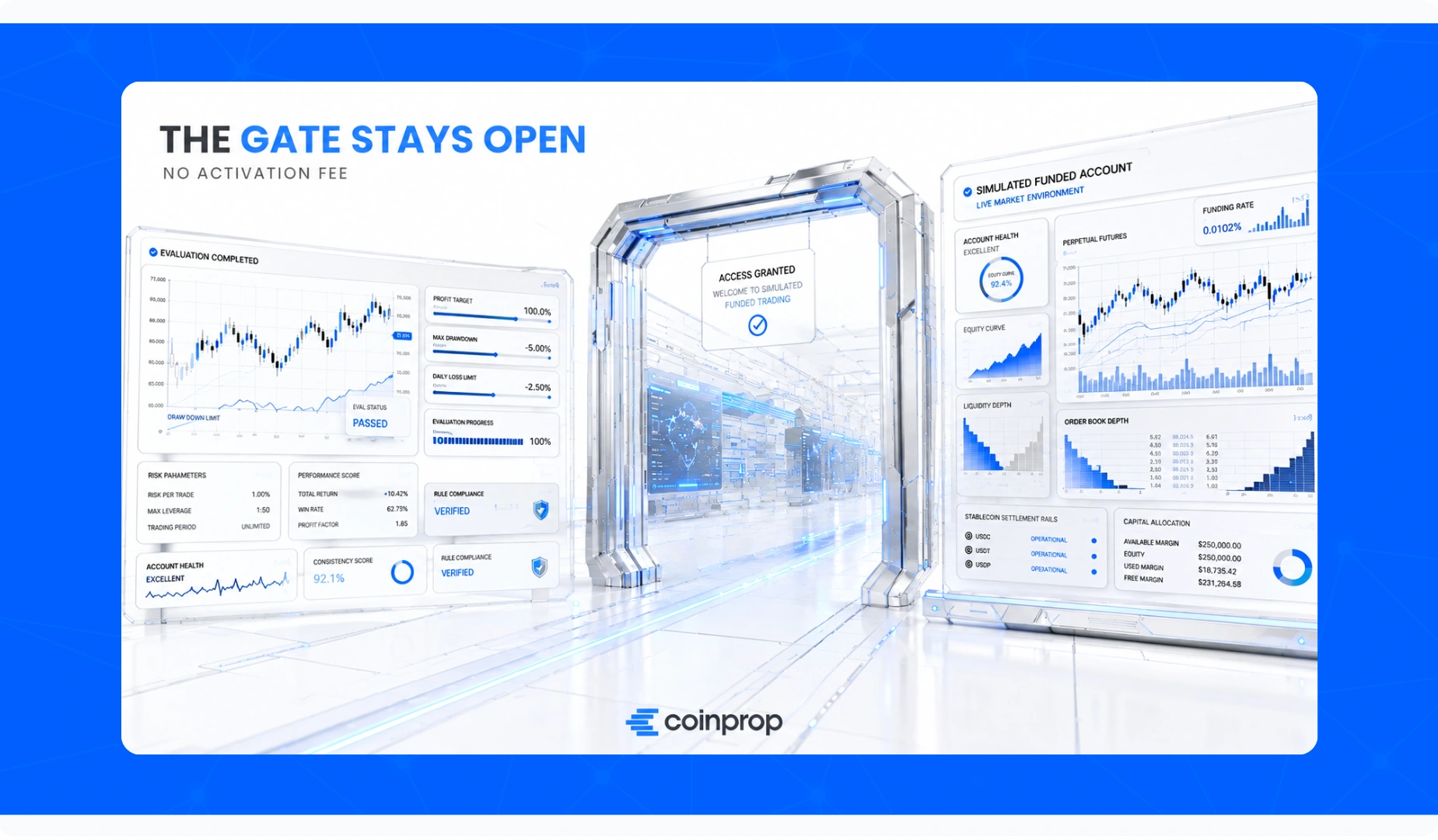
The cost of getting a funded crypto account is not limited to the initial challenge fee or whether a prop firm charges an activation fee. While avoiding an activation fee can reduce upfront expenses, traders should evaluate the complete cost structure before choosing a crypto prop firm.
The total cost may include evaluation fees, additional payments after passing, reset costs, profit split differences, and other charges that affect the overall value of a funded account.
Understanding these costs helps traders compare crypto prop firms more accurately and avoid choosing a firm based only on the lowest advertised entry price.
The challenge fee is usually the first expense traders pay when joining a crypto prop firm evaluation. This payment gives traders access to the evaluation process and the opportunity to qualify for a funded account.
Challenge fees can vary depending on the account size, evaluation model, and features included by the firm. However, a lower challenge fee does not always mean a cheaper path to funding.
The evaluation model can affect the total cost of getting funded. Some crypto prop firms use a one step evaluation, while others require traders to complete multiple stages before receiving a funded account. A shorter evaluation process may reduce the time required to qualify, but traders should still compare the challenge fee, trading rules, and overall conditions.
Traders should compare the challenge fee together with other potential costs, including activation fees, reset fees, and payout conditions, to understand the real cost of reaching a funded account.
Some crypto prop firms require traders to pay an activation fee after successfully completing the evaluation before they can access their funded account.
This means the actual cost of getting funded includes both the initial challenge fee and the additional activation payment. For traders, this second payment can increase the total expense and make the funding process less predictable.
Crypto prop firms with no activation fees remove this additional cost. For example, CoinProp does not charge an activation fee after traders qualify for a funded account, allowing successful traders to move forward without making another payment.
Reset and retry fees are another factor that can increase the total cost of trading with a prop firm. If a trader fails an evaluation, some firms allow them to restart the challenge by paying an additional fee.
Although reset options can be useful, frequent resets may significantly increase the total amount spent before reaching a funded account.
Before choosing a crypto prop firm, traders should understand whether resets are included, discounted, or charged separately.
The cost of a funded account is not only about what traders pay upfront. Profit split terms also affect how much of their trading profits they keep after becoming funded.
For example, a firm offering a higher profit split may provide better long term value even if its initial challenge fee is slightly higher.
Traders should also review payout conditions, including withdrawal frequency, minimum payout requirements, and any restrictions that may affect access to their profits.
Some crypto prop firms offer optional add ons or charge additional fees for specific features, services, or account modifications.
These costs may include platform access fees, data fees, additional risk options, or other upgrades. While optional features can be useful for some traders, they should be considered when calculating the total cost of a funded account.
A transparent crypto prop firm should clearly explain all possible charges before traders purchase an evaluation.
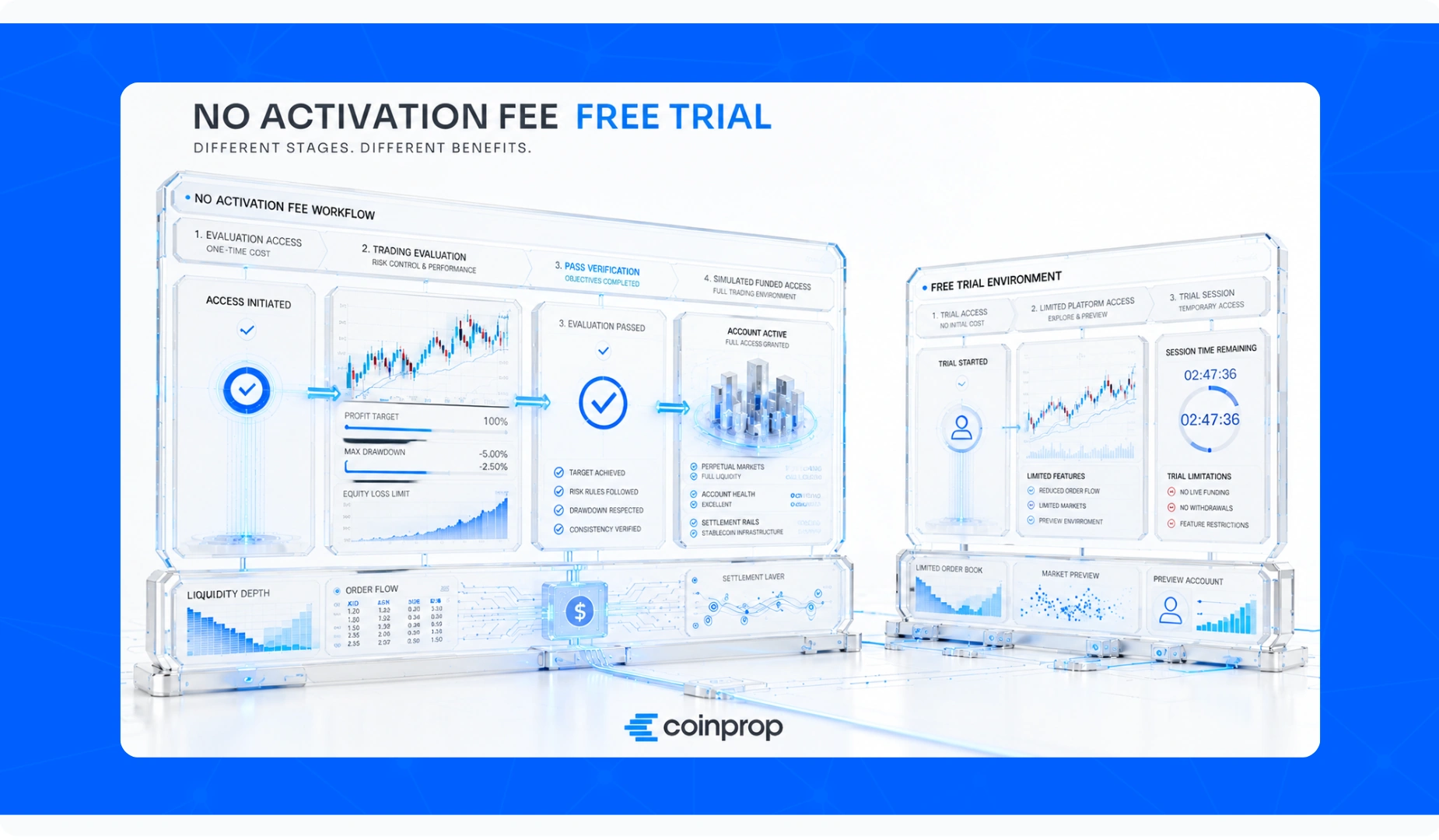
A crypto prop firm with no activation fee can reduce the cost of getting funded, but it is not the only factor traders should consider. While avoiding an additional payment after passing an evaluation is a clear advantage, the overall value of a prop firm depends on several factors, including challenge fees, profit splits, payout conditions, trading rules, and platform quality.
A lower fee structure is helpful, but traders should evaluate the complete offering instead of choosing a firm based on a single cost.
No activation fees can provide real savings when other costs remain competitive. By removing an additional payment after passing the evaluation, traders can reduce the total amount required to access a funded account.
For example, a trader who pays a challenge fee and then avoids an extra activation payment has a clearer understanding of their total investment from the beginning.
This makes no activation fee models especially attractive for traders who want predictable costs and a simpler path from evaluation to funded trading.
A lower entry cost does not always mean better value. Some crypto prop firms may charge a higher challenge fee but provide better conditions, such as a higher profit split, more flexible rules, better trading infrastructure, or stronger payout terms.
For this reason, traders should compare what they receive in exchange for the fee rather than focusing only on the lowest upfront price.
A slightly higher challenge fee may be worthwhile if it provides better long term opportunities for funded traders.
The best crypto prop firm choice depends on the complete cost structure and overall trading conditions.
Instead of asking only whether a firm charges an activation fee, traders should consider:
A no activation fee model is valuable, but the strongest choice is a crypto prop firm that combines transparent pricing with fair trading conditions and reliable payouts.
A no activation fee crypto prop firm is a company that does not require traders to make an additional payment after passing an evaluation before receiving a funded account.
Instead of charging a separate activation cost, these firms allow qualified traders to access their funded account without an extra payment. However, traders may still need to pay an evaluation fee or meet specific challenge requirements.
No, not all crypto prop firms charge activation fees. Some firms require an additional payment after traders pass the evaluation, while others provide funded accounts without this extra cost.
Before joining a prop firm, traders should review the complete pricing structure to understand whether any additional fees apply after passing the challenge.
Yes, some crypto prop firms allow traders to receive a funded account without paying an activation fee.
With a no activation fee model, traders who successfully complete the evaluation can move to the funded stage without making an additional payment after passing.
Not always. A crypto prop firm without an activation fee can reduce the total cost of getting funded, but traders should also consider other expenses such as challenge fees, reset fees, platform costs, and payout conditions.
The best value comes from comparing the complete cost structure rather than focusing on a single fee.
Before purchasing a crypto prop firm challenge, traders should review all potential costs, including:
Understanding the full pricing model helps traders avoid unexpected costs.
No, CoinProp does not charge an activation fee after traders successfully pass the evaluation.
Traders who qualify for a funded account can access funded trading without making an additional activation payment. This allows traders to understand their costs upfront and avoid unexpected fees after passing the challenge.
Choosing a crypto prop firm with no activation fee can help traders reduce upfront costs and avoid unexpected payments after passing an evaluation. However, the absence of an activation fee should not be the only factor when comparing prop firms.
Choosing the right crypto prop firm requires evaluating the complete offering, including pricing, trading conditions, and payout structure.
Traders should consider the complete cost structure, including challenge fees, reset costs, profit split terms, payout conditions, and overall trading conditions. A transparent pricing model helps traders understand the real cost of getting funded and make a more informed decision.
For traders looking for a crypto prop firm without an activation fee, CoinProp offers a transparent funding model with no additional activation payment after passing the evaluation. By removing this extra cost, traders can move to the funded stage without another financial step after meeting the requirements.
Ultimately, the best crypto prop firm is not necessarily the one with the lowest entry fee, but the one that provides a clear pricing structure, fair trading conditions, and reliable opportunities for long term success.
