The best crypto prop firms are those that provide fair rules, free trial opportunities, risk management tools, and an environment designed for long term trading success. Understanding these factors can help beginners choose a crypto prop firm that supports skill development, disciplined trading, and sustainable growth.
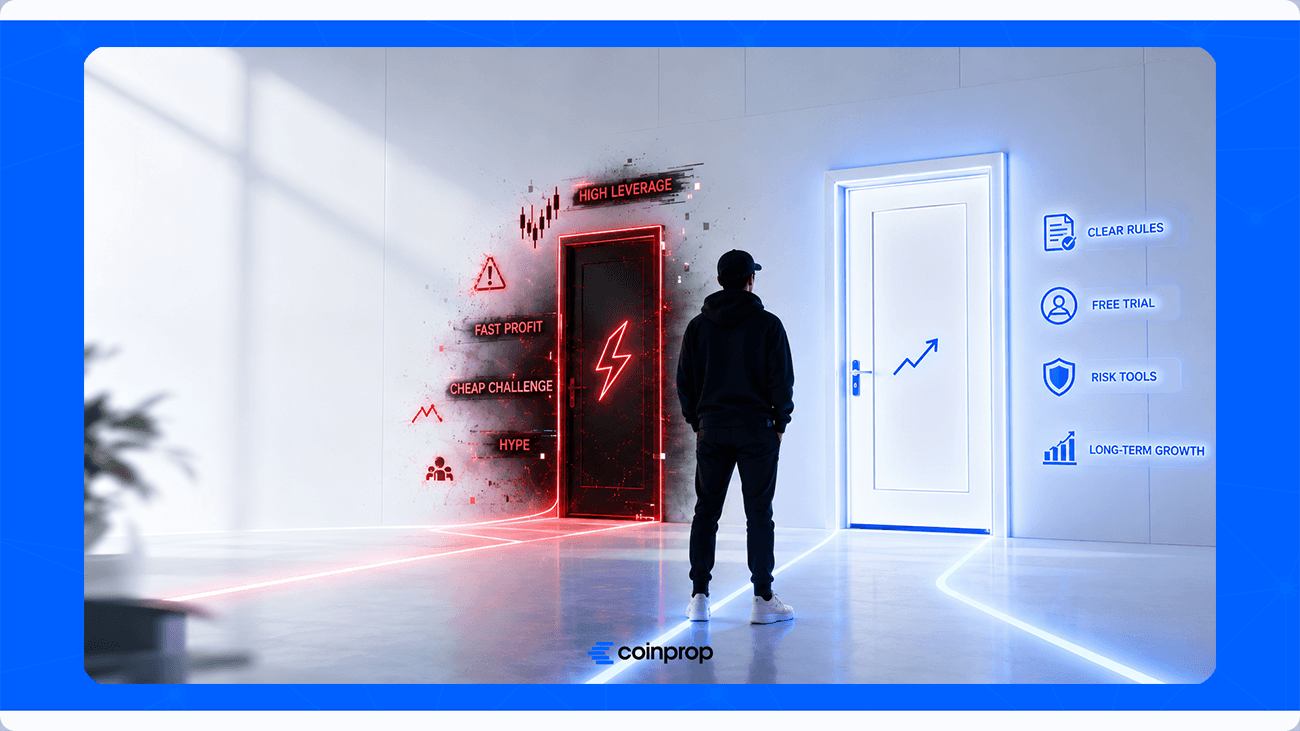
Choosing a crypto prop firm may seem straightforward at first. Many beginners compare challenge fees, leverage limits, and promotional offers before making a decision. However, the factors that attract new traders are often the same factors that lead to poor trading habits and failed evaluations.
The reality is that a beginner-friendly crypto prop firm is not necessarily the one with the biggest account size, the highest leverage, or the cheapest challenge. Instead, it is the one that creates an environment where traders can develop consistency, manage risk effectively, and improve their skills over time.
Many new traders focus on features that appear exciting in marketing materials while overlooking the elements that have a much greater impact on long-term success. Understanding these common mistakes can help traders choose a prop firm that supports sustainable growth rather than short-term speculation.
High leverage is often one of the first features that attracts beginner traders. Seeing leverage levels such as 100x, 200x, or even higher can create the impression that larger profits are easier to achieve. The idea of controlling a significant position with a relatively small amount of capital is naturally appealing, especially for traders who are eager to accelerate their progress.
However, leverage is simply a tool. It increases both potential gains and potential losses. While experienced traders may use leverage strategically within a structured risk management framework, beginners often view it as a shortcut to larger profits. This mindset can lead to oversized positions, emotional decision-making, and unnecessary exposure to market volatility.
In practice, most successful funded traders do not rely on extreme leverage to pass evaluations or maintain funded accounts. Their focus is typically on position sizing, risk control, and consistency rather than maximizing exposure on every trade. A crypto prop firm that encourages disciplined trading is often more valuable to a beginner than one that advertises the highest leverage available.
For new traders, access to responsible risk management tools and clear trading rules is usually far more important than access to excessive leverage.
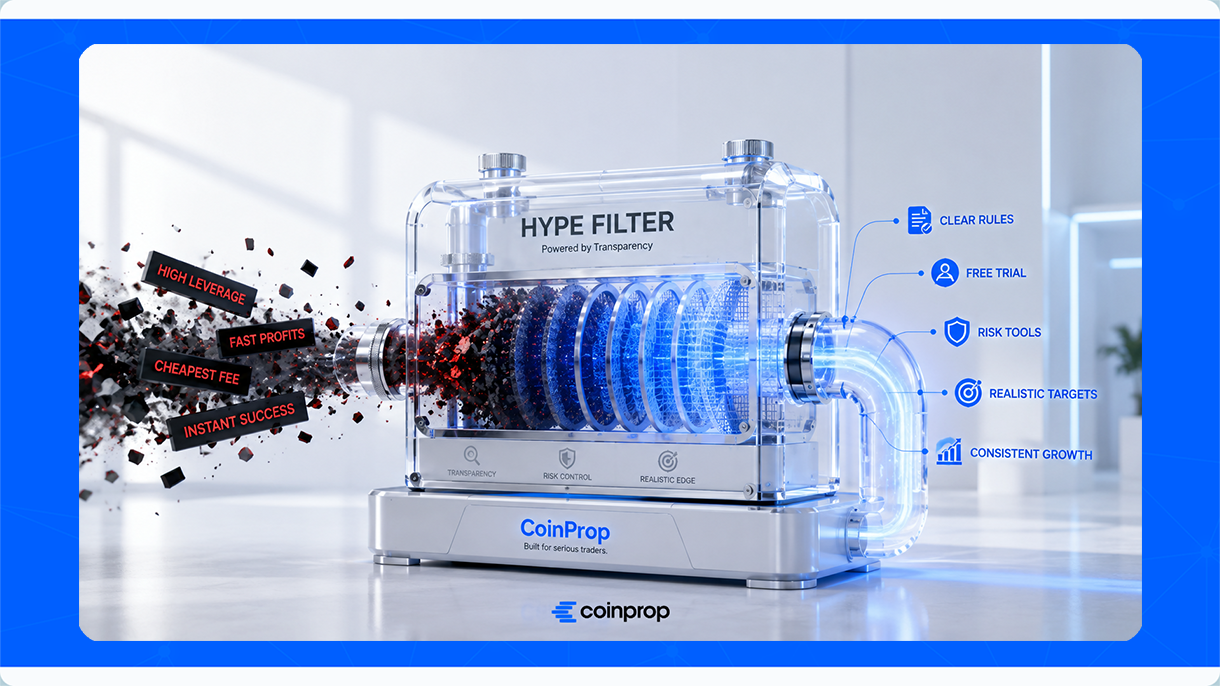
Another common mistake is choosing a crypto prop firm based on the expectation of generating profits as quickly as possible. Marketing messages that emphasize rapid funding, instant payouts, or fast account growth can create unrealistic expectations about the trading process.
While there is nothing wrong with efficient evaluation programs or fast withdrawals, beginners should understand that successful trading is a skill developed over time. Consistency, discipline, and risk management play a much larger role in long-term profitability than speed alone.
Many traders fail evaluations not because the profit target is impossible to reach, but because they attempt to reach it too quickly. This often results in overtrading, excessive risk-taking, and abandoning a trading plan in pursuit of short-term gains.
A beginner-friendly crypto prop firm should support healthy trading behavior rather than encourage traders to chase unrealistic results. Features such as reasonable profit targets, transparent rules, educational resources, and risk management tools can be far more valuable than promises of rapid success.
The goal should not be to pass a challenge as quickly as possible. The goal should be to develop the habits necessary to remain profitable after becoming funded.
Challenge fees are often one of the first factors traders compare when evaluating different crypto prop firms. Lower prices can appear attractive, especially for beginners who want to minimize their initial investment. However, focusing exclusively on cost can be misleading.
A cheaper challenge does not automatically provide better value. Two prop firms may offer similar account sizes while having very different evaluation requirements, drawdown structures, payout conditions, and trader support systems. In some cases, a slightly higher-priced challenge may offer significantly fairer trading conditions and a better overall experience.
For example, a challenge with a lower fee but restrictive rules may be more difficult to pass than a challenge with a higher fee and trader-friendly conditions. Likewise, access to free trials, educational materials, risk management tools, and transparent evaluation criteria can provide meaningful benefits that are not reflected in the challenge price alone.
Instead of asking, "Which challenge is the cheapest?" beginners should ask, "Which prop firm provides the best environment for long-term trading success?" The answer often depends on the quality of the rules, the transparency of the program, the availability of learning resources, and the overall support provided to traders.
Ultimately, the best crypto prop firm for beginners is rarely the one that offers the highest leverage, the fastest profits, or the lowest challenge fee. It is the one that helps traders build strong habits, manage risk effectively, and develop the consistency required for long-term success.
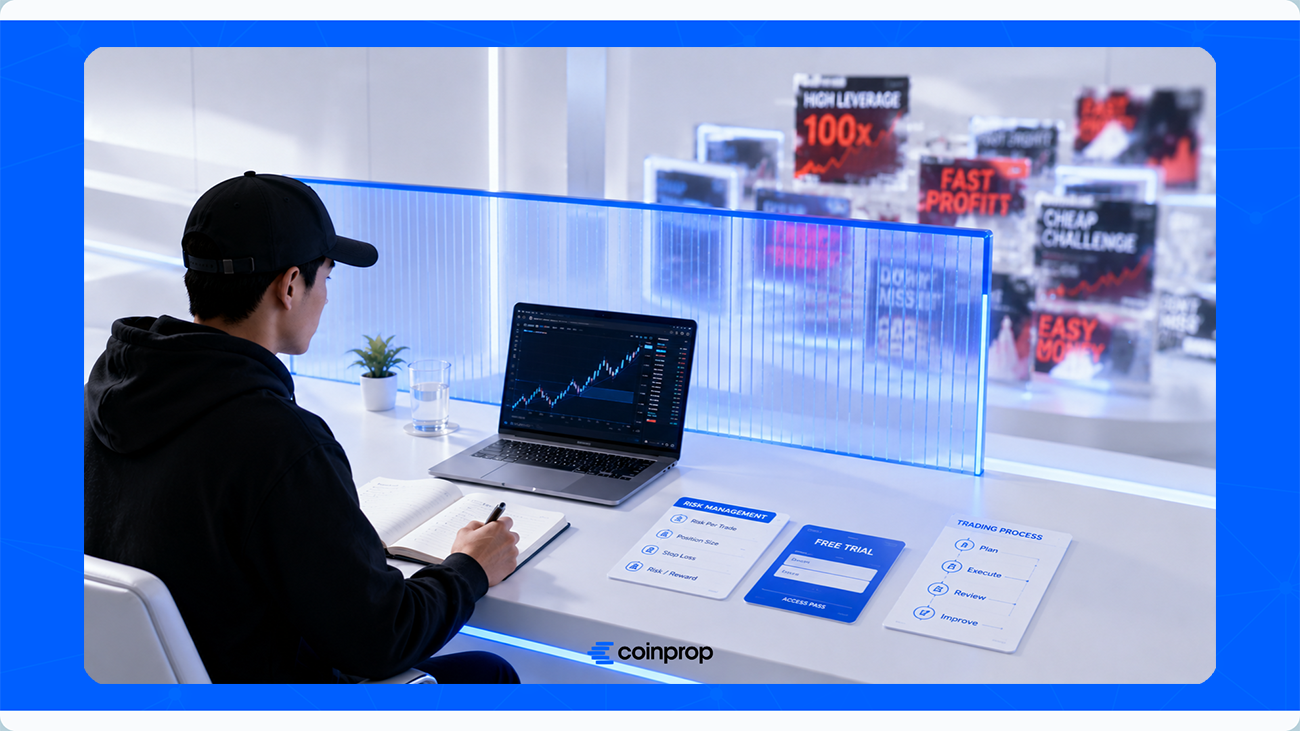
Not all crypto prop firms are designed with beginner traders in mind. Some evaluation programs prioritize aggressive growth, complex rule structures, or highly demanding performance requirements that can be difficult for inexperienced traders to navigate. While experienced traders may adapt to these conditions, beginners often benefit from a more transparent and structured environment.
A beginner-friendly crypto prop firm should help traders focus on developing consistency, discipline, and risk management skills rather than forcing them to chase unrealistic performance targets. The best firms create conditions that reward sound trading practices and allow traders to learn without unnecessary complexity.
Several factors can make a significant difference in whether a prop firm supports long-term trader development or simply attracts traders with appealing marketing claims.
One of the most important characteristics of a beginner-friendly crypto prop firm is rule transparency. Traders should be able to understand exactly what is expected of them before they begin a challenge or funded account.
Confusing restrictions, hidden conditions, or complicated rule interpretations can create uncertainty and increase the likelihood of accidental violations. Beginners are already focused on learning market behavior, developing strategies, and managing risk. They should not have to spend excessive time deciphering unclear evaluation requirements.
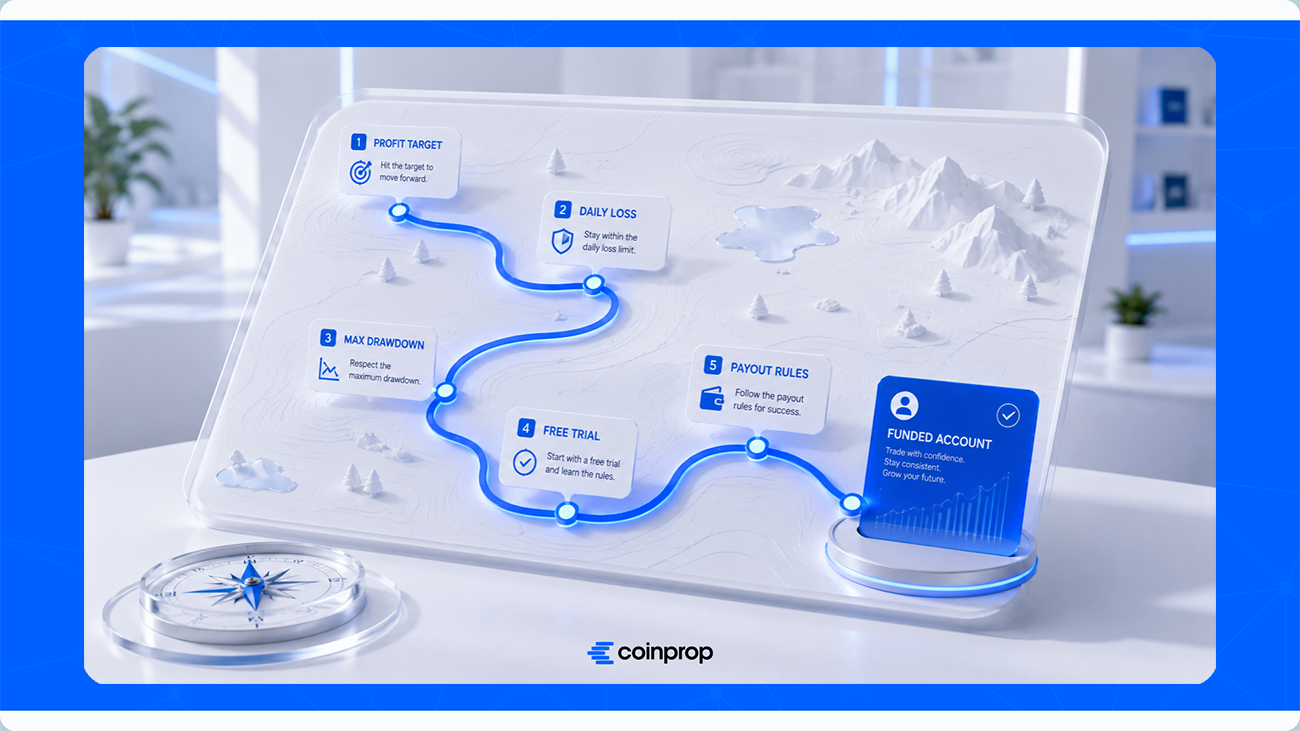
Transparent rules allow traders to make informed decisions and execute their strategies with confidence. Important details such as profit targets, daily loss limits, maximum drawdown rules, payout requirements, and scaling conditions should be clearly explained and easily accessible.
When evaluating a crypto prop firm, beginners should look for programs where the rules are straightforward, consistent, and simple to understand. Clarity reduces unnecessary stress and helps traders concentrate on improving their performance rather than worrying about technical rule violations.
Profit targets play a major role in determining how difficult an evaluation will be. While ambitious targets may appear attractive from a marketing perspective, they can sometimes encourage traders to take excessive risks in order to pass quickly.
A beginner-friendly crypto prop firm should set profit objectives that can be achieved through disciplined trading rather than aggressive speculation. Realistic targets allow traders to focus on executing their strategy correctly, managing risk, and building consistency over time.
When profit targets are balanced appropriately with the available drawdown limits, traders can approach evaluations with a professional mindset instead of feeling pressured to force trades. This creates a healthier trading environment and often leads to better long-term outcomes.
Beginners should remember that passing a challenge is only one step in the process. The habits required to reach a realistic profit target are often the same habits needed to remain profitable after becoming funded.
Drawdown limits are among the most important risk controls in any prop trading program. They define the maximum amount a trader can lose before an account is considered failed.
For beginners, drawdown rules should provide enough flexibility to withstand normal market fluctuations without encouraging reckless risk-taking. Extremely restrictive limits can make evaluations unnecessarily difficult, while excessively generous limits may encourage poor risk management practices.
A reasonable drawdown structure allows traders to execute their strategy without constantly fearing that normal trading activity will result in a violation. At the same time, it reinforces the importance of protecting capital and maintaining disciplined risk management.
Understanding how drawdown is calculated is equally important. Traders should carefully review whether a firm uses static drawdown, trailing drawdown, daily loss limits, or a combination of risk controls. Clear and predictable drawdown policies help create a more stable trading experience and reduce unexpected surprises during an evaluation.
The purpose of a prop firm evaluation should be to identify traders who can manage risk and generate profits consistently. The most beginner-friendly firms design their evaluations around these principles rather than creating unnecessary obstacles.
Fair evaluation requirements reward disciplined execution, patience, and proper risk management. They allow traders to demonstrate their skills without relying on excessive leverage, oversized positions, or unrealistic trading behavior.
When assessing an evaluation program, beginners should consider whether the requirements align with professional trading practices. A well-designed challenge encourages consistency and sound decision-making, while an overly restrictive or poorly structured challenge may push traders toward unnecessary risk.
The best crypto prop firms recognize that long-term success is built through repeatable processes rather than short-term performance spikes. As a result, their evaluation models are designed to identify sustainable trading habits instead of rewarding gambling-like behavior.
For beginners, choosing a prop firm with clear rules, realistic profit targets, reasonable drawdown limits, and fair evaluation requirements can make a significant difference in both learning outcomes and long-term trading success.
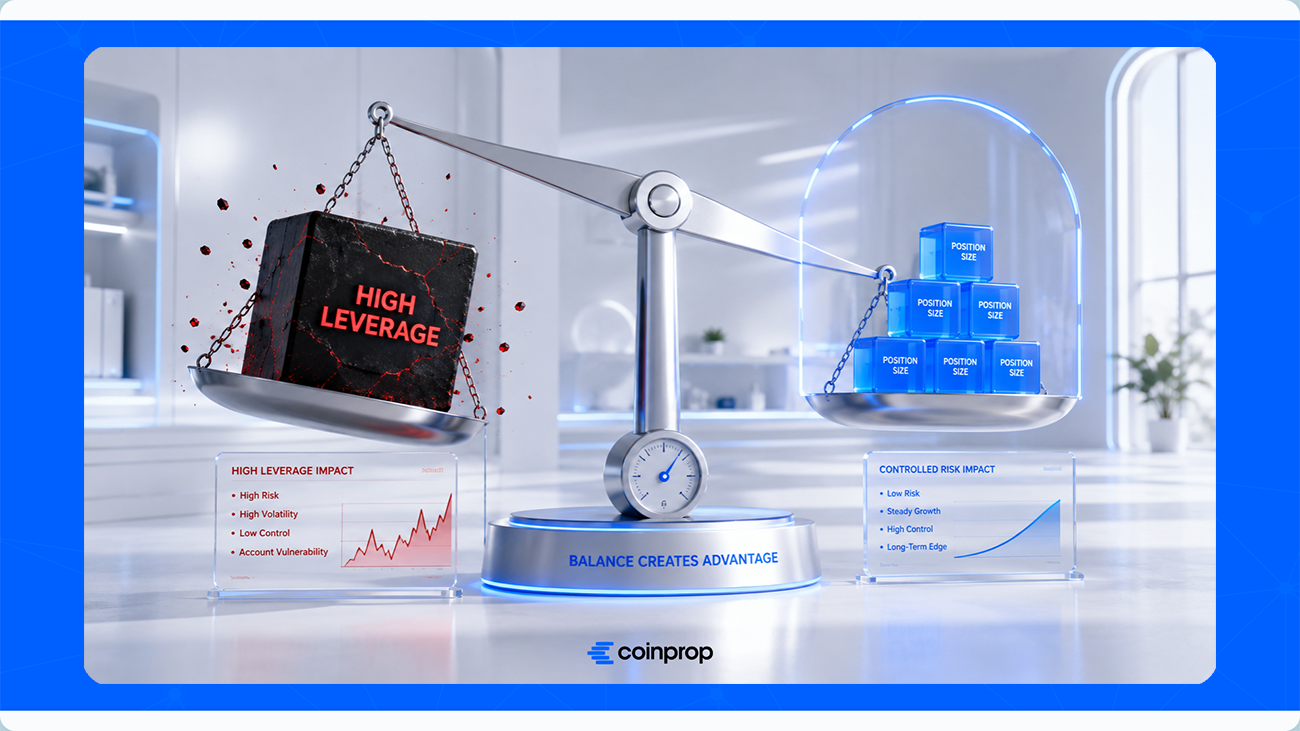
High leverage is often promoted as one of the biggest advantages offered by trading platforms and prop firms. For many beginners, the ability to control a large position with a relatively small amount of capital can seem like a shortcut to faster profits. As a result, leverage frequently becomes one of the first factors traders compare when choosing a crypto prop firm.
However, leverage alone does not improve trading performance. It simply increases exposure. While it can amplify profits, it can also amplify losses, emotional pressure, and trading mistakes. For inexperienced traders, these risks often outweigh the potential benefits.
A beginner-friendly crypto prop firm should help traders develop consistency and risk management skills rather than encourage excessive exposure. Understanding how leverage affects trading decisions can help beginners avoid one of the most common causes of failed evaluations and funded account losses.
Many traders assume that higher leverage automatically creates more opportunities. In reality, leverage only changes the amount of capital controlled by a position. It does not improve market analysis, increase trading skill, or enhance the quality of trade setups.
A trader with a profitable strategy can often achieve strong results without using extreme leverage. Likewise, a trader with poor risk management can quickly lose an account regardless of how much leverage is available.
The true opportunity in prop trading comes from identifying high-quality setups, managing risk effectively, and executing a consistent strategy. These factors remain far more important than the maximum leverage offered by a prop firm.
In many cases, beginners become distracted by leverage and overlook more meaningful factors such as drawdown rules, profit targets, evaluation requirements, and available risk management tools. Yet these elements often have a much greater impact on long-term success than leverage itself.
While leverage can increase potential returns, it also introduces risks that are often underestimated by new traders. One of the biggest dangers is overleveraging, which occurs when traders take positions that are too large relative to their account size and risk tolerance.
Overleveraging can create several problems:
Many failed prop firm challenges are not caused by poor market analysis. Instead, they result from excessive position sizes and poor risk management decisions. Traders may correctly identify market direction but still fail because their risk exposure is too large.
The psychological impact can be just as damaging. When too much capital is at risk on a single trade, emotions often begin to influence decision-making. Fear, greed, and impatience can replace discipline and objectivity, leading to a cycle of avoidable mistakes.
This is why successful traders often focus on position sizing and risk control before considering leverage. Their goal is not to maximize exposure but to maximize consistency.
One of the biggest misconceptions among beginners is that professional traders rely heavily on extreme leverage. In reality, many consistently profitable traders use leverage conservatively and focus primarily on risk management.
Rather than asking how much leverage is available, experienced traders typically ask:
These questions are far more important than whether a platform offers 20x, 100x, or 1000x leverage.
Consistent traders understand that longevity is a competitive advantage. Preserving capital allows them to continue executing their strategy through changing market conditions. This mindset often leads to smaller position sizes, controlled risk exposure, and a stronger focus on long-term performance.
For beginners, leverage should be viewed as a tool rather than a goal. The best crypto prop firms are not necessarily the ones offering the highest leverage. Instead, they are the firms that provide an environment where traders can manage risk responsibly, develop sound habits, and build a sustainable trading career over time.
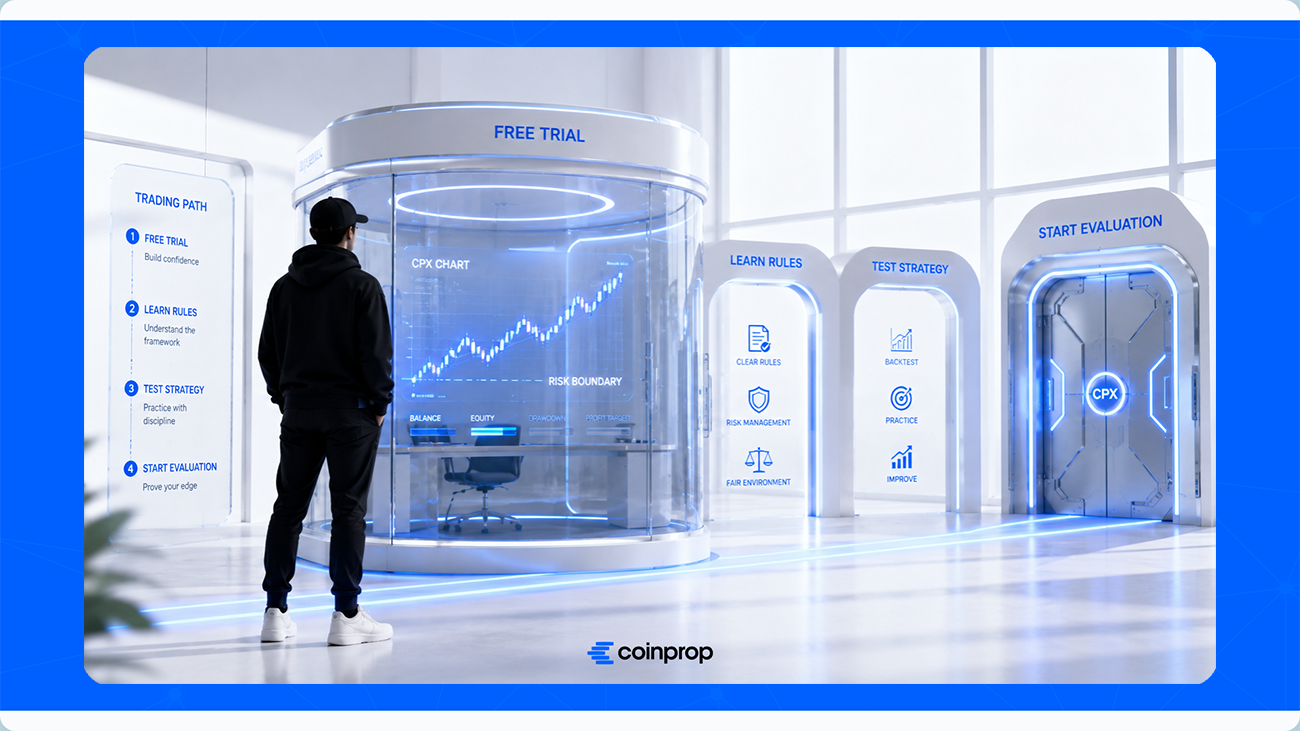
One of the most overlooked features when choosing a crypto prop firm is the availability of a free trial. Many beginners focus heavily on challenge fees, leverage, or payout percentages, yet overlook the value of being able to experience a firm's trading environment before committing real money.
For experienced traders, purchasing a challenge may be a straightforward decision. However, beginners are often still refining their strategies, learning risk management principles, and adapting to the specific rules used by prop firms. In these situations, a free trial can provide valuable experience without exposing traders to unnecessary financial pressure.
A well-designed free trial allows traders to understand how a prop firm operates, evaluate whether its rules fit their trading style, and build confidence before entering a live evaluation. Rather than rushing into a challenge, beginners can use the opportunity to identify weaknesses, improve their execution, and develop habits that increase their chances of long-term success.
Every crypto prop firm has its own evaluation structure, trading rules, and risk parameters. Even traders with experience in personal accounts may find that prop firm environments require adjustments to their approach.
A free trial allows beginners to learn these rules in a practical setting without worrying about losing challenge fees. Instead of reading rule pages and hoping they understand every detail correctly, traders can experience how drawdown limits, profit targets, and other requirements affect their day-to-day decision-making.
This hands-on learning process often helps traders understand the rules more effectively than simply studying documentation. It also reduces the likelihood of making costly mistakes during a paid challenge.
Most importantly, learning without financial pressure creates a more productive environment. Traders can focus on understanding the evaluation process rather than worrying about whether every decision could immediately impact a purchased account.
Many beginners purchase challenges before fully validating their trading strategies. While confidence in a strategy is important, real-world execution often reveals weaknesses that are difficult to identify through theory alone.
A free trial provides an opportunity to test a strategy under conditions that closely resemble a real evaluation. Traders can observe how their system performs across different market environments while also learning whether their approach aligns with the firm's rules and risk requirements.
This process can help answer important questions:
Identifying these answers before purchasing a challenge can save both time and money. It allows traders to make adjustments when necessary rather than discovering problems after entering a paid evaluation.
Confidence is an important part of trading performance, but genuine confidence is built through preparation rather than optimism. Many beginners enter challenges with unrealistic expectations, only to experience emotional pressure once real money is involved.
A free trial can help bridge this gap by providing practical experience in a lower-pressure environment. As traders become familiar with the platform, rules, and evaluation structure, uncertainty decreases and confidence naturally increases.
This experience can improve decision-making by reducing emotional reactions to normal market fluctuations. Traders who understand their strategy, know the rules, and have already practiced within the firm's environment are often better equipped to remain disciplined when transitioning to a paid challenge.
The goal is not simply to gain confidence but to build confidence that is supported by preparation and experience.
Perhaps the greatest advantage of a free trial is the opportunity to discover weaknesses before real money is at stake.
Many traders believe they have a solid plan until they begin trading under evaluation-style conditions. A free trial can expose issues that may otherwise remain hidden, including inconsistent risk management, poor position sizing, emotional decision-making, or unrealistic performance expectations.
Recognizing these weaknesses early allows traders to make improvements before entering a paid challenge. This learning process can be far more valuable than immediately purchasing an account and hoping for the best.
The most successful traders often view free trials as preparation tools rather than shortcuts to funding. They use the experience to refine their process, improve discipline, and develop the consistency needed for long-term performance.
For beginners, a free trial is more than a promotional feature. It is an opportunity to learn the rules, test strategies, build confidence, and identify weaknesses before taking on the pressure of a real evaluation. That is why access to a quality free trial can be one of the most valuable features a beginner-friendly crypto prop firm can offer.
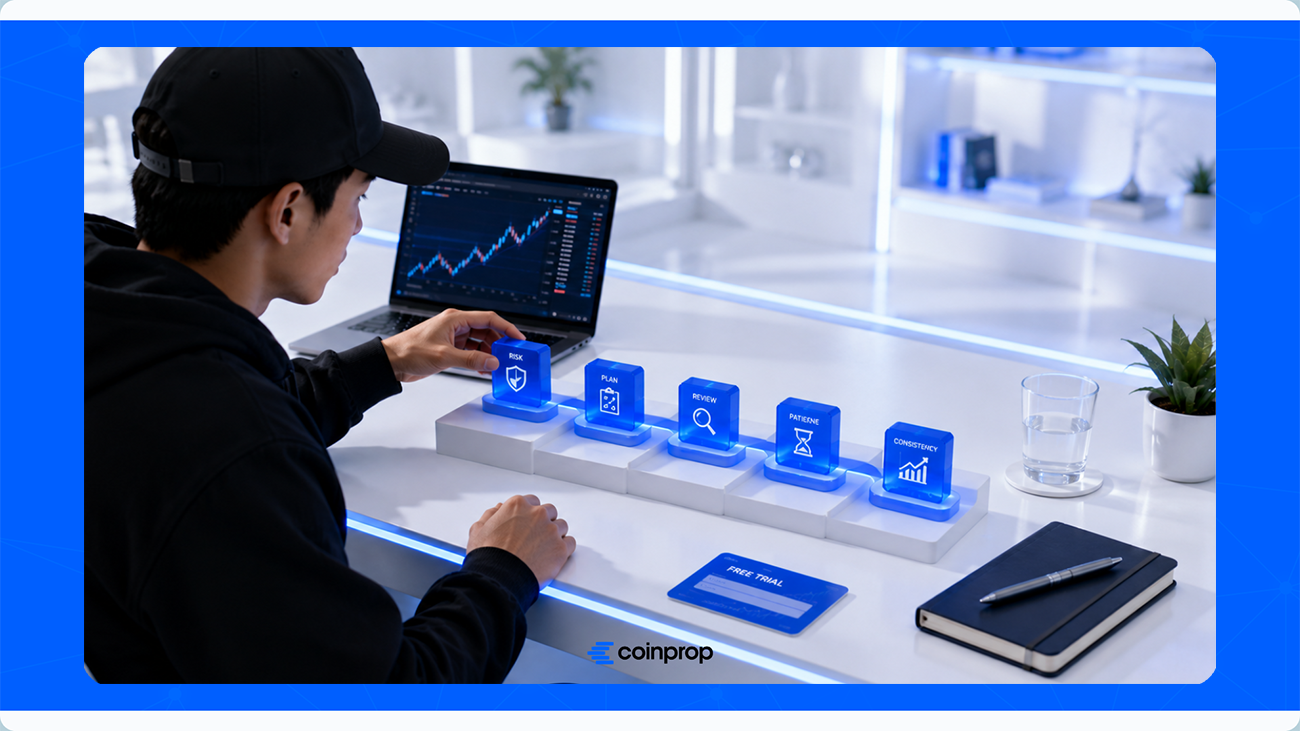
Many beginner traders focus on account size, leverage, or challenge fees when comparing crypto prop firms. While these factors may seem important at first, the rules governing the evaluation and funded account often have a much greater impact on a trader’s chances of success.
Two prop firms can offer similar account sizes and pricing while providing completely different trading experiences. Differences in drawdown limits, profit targets, consistency requirements, and scaling opportunities can significantly affect both challenge difficulty and long-term profitability.
Before purchasing a challenge, beginners should carefully review the rules that define how performance is measured and how risk is managed. Understanding these requirements can help traders choose a prop firm that supports sustainable growth rather than one that unintentionally encourages poor trading habits.
A daily loss limit defines the maximum amount a trader can lose within a single trading day before violating the firm's risk parameters.
The purpose of this rule is to prevent excessive losses and encourage disciplined risk management. While some traders view daily loss limits as restrictive, they often serve as an important safeguard against emotional decision-making and revenge trading.
For beginners, daily loss limits can help establish healthy trading habits by forcing traders to recognize when it is time to step away from the market. Instead of attempting to recover losses through increasingly aggressive trades, traders are encouraged to maintain consistency and protect capital.
When evaluating a crypto prop firm, beginners should understand how the daily loss limit is calculated and whether unrealized losses from open positions are included. Small differences in calculation methods can significantly affect how traders manage risk throughout the day.
Maximum drawdown is one of the most important risk controls used by crypto prop firms. It represents the maximum decline an account can experience before the evaluation or funded account is considered failed.
While profit targets often receive the most attention, drawdown limits typically determine how much flexibility a trader has while pursuing those targets. A reasonable drawdown structure allows traders to withstand normal periods of market volatility without placing excessive pressure on every trade.
Beginners should also understand how the drawdown is calculated. Some firms use static drawdown models, while others use trailing drawdown structures that adjust based on account performance. These differences can significantly influence risk management decisions and the overall difficulty of an evaluation.
A clear understanding of drawdown rules helps traders develop realistic expectations and avoid unexpected violations.
Profit targets define the amount of profit a trader must generate in order to pass an evaluation or progress through different stages of a funding program.
Although profit targets are a standard component of most prop firm challenges, beginners should evaluate them in context rather than viewing them in isolation. A target that appears achievable may become far more difficult if paired with restrictive drawdown limits or other challenging requirements.
The most beginner-friendly crypto prop firms typically establish profit targets that can be achieved through disciplined execution and sound risk management. Traders should never feel compelled to abandon their trading plan or take excessive risks simply to reach a target within a short period of time.
Ultimately, profit targets should encourage consistent performance rather than reward gambling-like behavior.
Some crypto prop firms use consistency requirements to evaluate how traders generate their profits. These rules are designed to discourage excessive risk-taking and promote stable performance over time.
Consistency requirements can take many forms. A firm may limit how much profit can come from a single trading day, monitor position sizing behavior, or evaluate whether profits are generated through a repeatable process rather than isolated high-risk trades.
For beginners, understanding these requirements is important because they can affect strategy selection and risk management decisions. Traders who ignore consistency rules may achieve the profit target but still struggle to meet the firm's overall evaluation standards.
A prop firm that values consistency often aligns more closely with professional trading principles, encouraging traders to focus on sustainable performance rather than short-term gains.
While many beginners focus on passing a challenge, it is equally important to consider what happens after becoming funded. This is where scaling opportunities become relevant.
Scaling programs allow traders to increase their account allocation over time as they demonstrate consistent profitability and responsible risk management. Instead of remaining at a fixed account size, successful traders may gain access to larger capital allocations through predefined growth plans.
For beginners, a strong scaling program can provide a clear pathway for long-term development. It rewards consistency and creates incentives for traders to maintain disciplined habits rather than pursue aggressive short-term results.
When evaluating a crypto prop firm, traders should review whether a scaling plan exists, how account growth is measured, and what requirements must be met to qualify for larger allocations.
The best crypto prop firms are not necessarily the ones with the largest advertised accounts or the most aggressive marketing claims. They are often the firms whose rules support sustainable trading behavior, effective risk management, and long-term trader development. Understanding daily loss limits, maximum drawdown rules, profit targets, consistency requirements, and scaling opportunities can help beginners make a more informed decision and choose a prop firm that aligns with their goals.
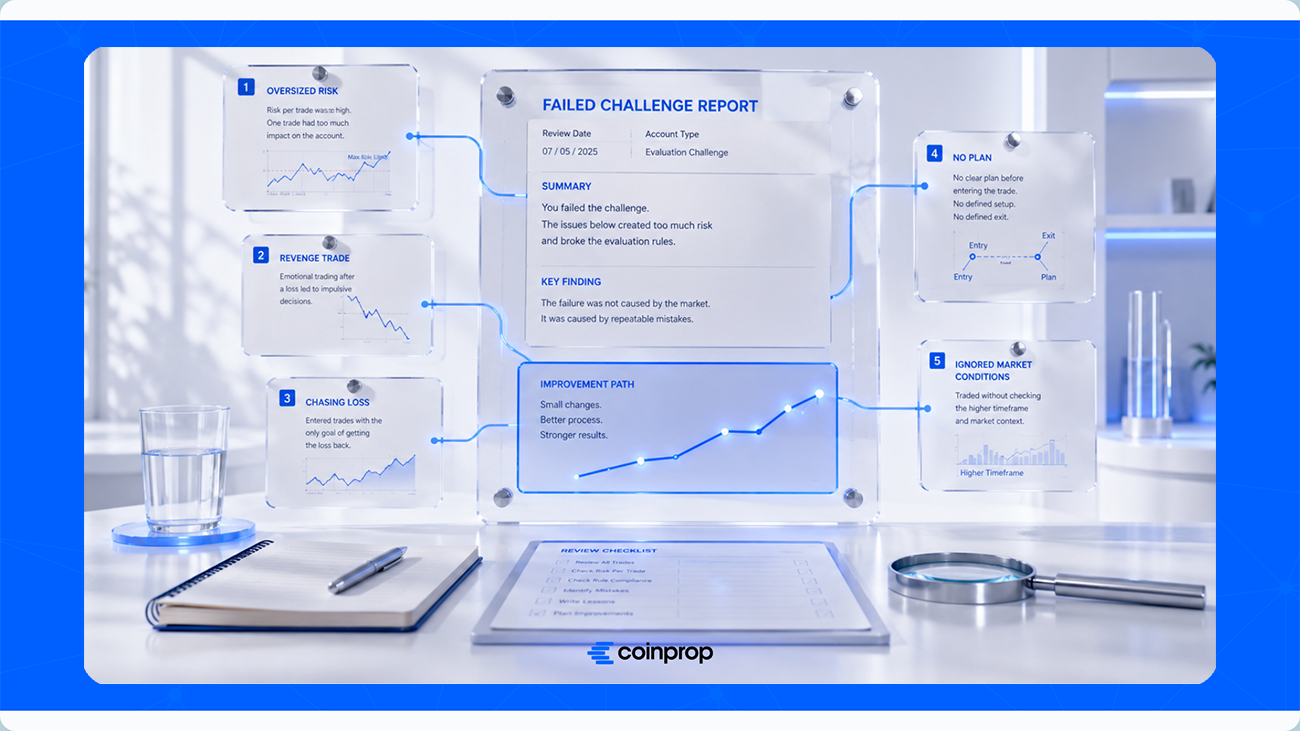
With so many crypto prop firms competing for attention, beginners are often faced with an overwhelming number of offers, promotions, and marketing promises. From massive account sizes and extreme leverage to discounted challenge fees and fast payouts, nearly every firm claims to offer a significant advantage.
The challenge is that the most heavily advertised features are not always the ones that have the greatest impact on a trader's long-term success. A firm that appears attractive on the surface may have rules or conditions that make consistent trading difficult, while a less aggressively marketed firm may provide a much better environment for growth.
Instead of focusing on promotional headlines, beginners should evaluate how a prop firm's structure aligns with sound trading principles. The goal is not simply to pass a challenge, but to find a firm that supports sustainable performance over time.
Marketing is designed to attract attention, but successful traders learn to separate promotional messages from practical trading conditions.
Phrases such as "highest leverage," "instant funding," "largest account sizes," or "fastest payouts" can be appealing, especially to newer traders. However, these features do not necessarily make a prop firm a better choice.
Many beginners make the mistake of evaluating firms based on what is emphasized in advertisements rather than what will actually affect their trading experience. In reality, factors such as risk parameters, evaluation structure, rule transparency, and trader support often play a much larger role in determining long-term outcomes.
When comparing firms, traders should look beyond the headline features and examine the complete trading environment. A firm that promotes responsible trading practices and realistic expectations is often more valuable than one focused solely on aggressive marketing.
One of the most effective ways to compare crypto prop firms is to focus on their rules rather than their promotions.
Challenge discounts and limited-time offers may reduce the initial cost of participation, but they do not change the actual conditions traders must meet to succeed. What ultimately matters is whether the evaluation structure allows traders to execute a disciplined strategy while managing risk effectively.
Beginners should compare factors such as:
These elements define the real trading experience. Small differences in rule design can significantly affect challenge difficulty, account management, and long-term profitability.
A lower-priced challenge with restrictive conditions may be far less attractive than a slightly more expensive challenge with trader-friendly rules and greater flexibility.
Many beginners focus heavily on short-term considerations such as challenge fees or promotional discounts. While cost is certainly an important factor, it should not be the only factor.
Long-term value comes from the overall quality of the trading environment and the opportunities available after becoming funded. A prop firm should be viewed as a long-term trading partner rather than simply a one-time challenge provider.
When evaluating long-term value, traders should consider questions such as:
A slightly higher upfront cost may be justified if it provides access to better trading conditions, stronger support, and more sustainable opportunities over time.
The objective should be to maximize long-term potential rather than minimize short-term expenses.
The best crypto prop firm for beginners is rarely the one that promises the fastest profits or the most aggressive trading conditions. Instead, it is typically the firm that encourages consistency, discipline, and responsible risk management.
Successful traders understand that long-term profitability is built through repeatable processes rather than isolated winning trades. As a result, they tend to favor firms whose rules align with professional trading principles and reward sustainable performance.
When comparing crypto prop firms, beginners should ask a simple question:
"Does this firm encourage the type of trading behavior that leads to long-term success?"
If the answer is yes, the firm is likely worth serious consideration. If the firm's structure appears to encourage excessive risk-taking, overtrading, or unrealistic expectations, it may create unnecessary obstacles for developing traders.
Ultimately, the strongest crypto prop firms are not defined by their marketing claims. They are defined by the quality of their rules, the fairness of their evaluation process, and their ability to support traders who are committed to consistent improvement. For beginners, choosing a firm built around these principles can make a significant difference in both learning outcomes and long-term performance.
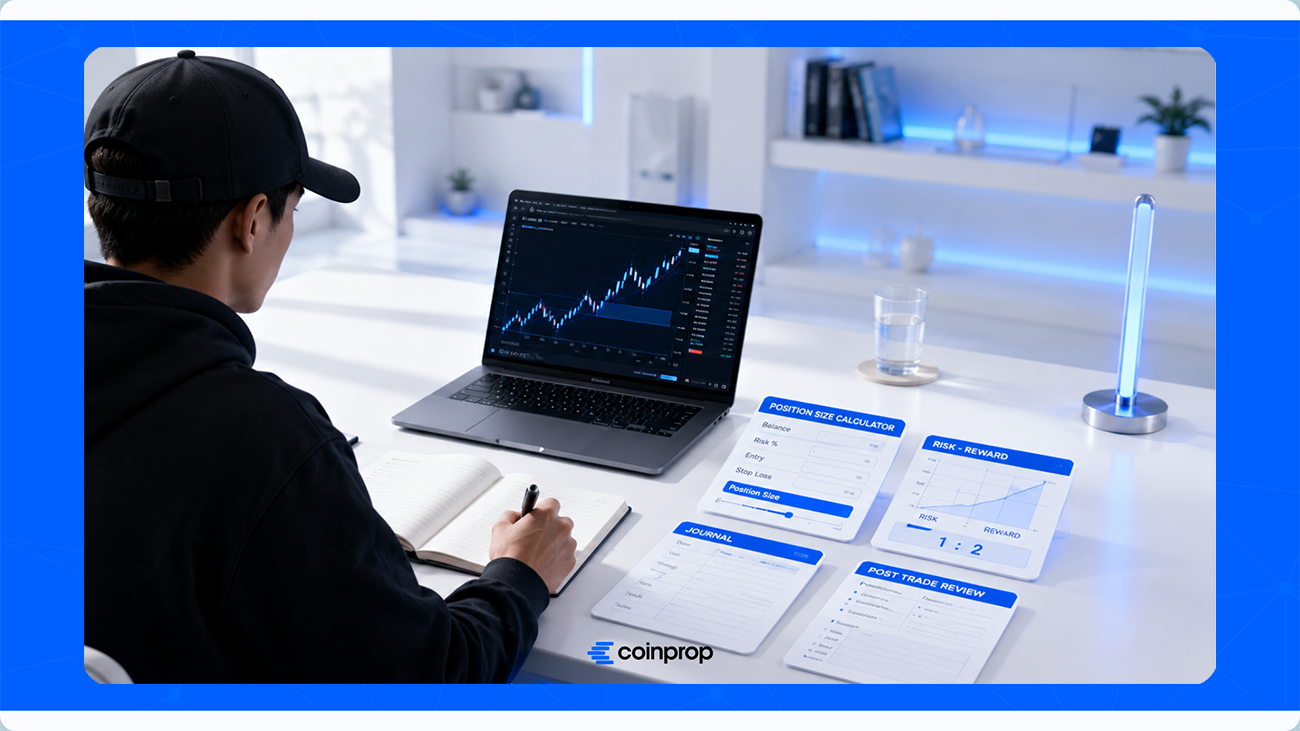
Many beginner traders spend significant time searching for the perfect strategy while overlooking the tools that can improve decision-making and reduce costly mistakes. In reality, successful prop trading is not only about identifying profitable opportunities. It is also about managing risk, maintaining consistency, and continuously evaluating performance.
Professional traders rarely rely on intuition alone. Instead, they use tools and processes that help them make objective decisions before, during, and after every trade. These tools are particularly valuable in a prop trading environment where risk limits, drawdown rules, and performance targets must be carefully managed.
For beginners, developing a structured approach is often far more important than finding a new trading setup. The following tools can help traders improve discipline, protect capital, and build the habits required for long-term success.
One of the most important tools for any trader is a position size calculator. While many beginners focus on potential profits, professional traders typically begin by determining how much they are willing to risk before entering a position.
A position size calculator helps traders determine the appropriate trade size based on account balance, risk tolerance, and stop-loss distance. Rather than choosing a position size based on emotion or guesswork, traders can use a consistent process that aligns with their risk management plan.
This approach offers several advantages:
In a crypto prop firm environment, where violating risk limits can result in a failed challenge or funded account breach, proper position sizing is often one of the most important factors influencing long-term performance.
While position sizing determines how much risk is being taken, a risk reward calculator helps traders evaluate whether a potential trade is worth taking in the first place.
This tool compares the amount of capital at risk to the potential reward of a trade. By calculating the relationship between risk and potential profit, traders can make more objective decisions and avoid setups that offer unfavorable probabilities.
Many beginners mistakenly believe they need an extremely high win rate to become profitable. In reality, profitability often depends more on the relationship between risk and reward than on win rate alone.
Using a risk reward calculator can help traders:
When combined with proper position sizing, risk reward analysis encourages a structured decision-making process rather than impulsive trading.
A trading journal is one of the most effective tools for accelerating trader development, yet it is often overlooked by beginners.
Most traders remember their best trades and their biggest losses, but memory alone rarely provides an accurate picture of overall performance. A journal creates a detailed record of trading activity, allowing traders to identify patterns that may otherwise go unnoticed.
An effective journal typically includes:
Over time, these records can reveal strengths, weaknesses, and recurring mistakes. Traders may discover that certain setups consistently perform well, while others repeatedly generate poor results.
More importantly, journaling encourages accountability. Instead of judging performance based on individual outcomes, traders learn to evaluate whether they followed their process correctly.
Recording trades is valuable, but reviewing them is where meaningful improvement occurs.
Many beginners spend hours analyzing charts before entering trades but invest very little time reviewing completed positions. As a result, they often repeat the same mistakes without recognizing the underlying causes.
Post-trade reviews help transform trading activity into a continuous learning process. By analyzing performance over a series of trades, traders can identify areas for improvement and make adjustments based on objective data rather than emotions.
A useful review process may include evaluating:
The goal of a review is not simply to determine whether a trade was profitable. A profitable trade that violated risk management rules may still represent poor execution, while a losing trade that followed a well-defined plan may represent good execution.
Consistent traders understand this distinction. They focus on improving their process because strong processes tend to produce strong results over time.
For beginner crypto prop traders, tools such as position size calculators, risk reward calculators, trading journals, and post-trade performance reviews provide a framework for disciplined decision-making. While no tool can guarantee success, these resources can help traders manage risk more effectively, learn from experience, and build the consistency required to succeed in both evaluations and funded accounts.
Most failed prop firm challenges are not caused by a lack of market knowledge. In many cases, traders correctly identify trends, understand technical analysis, and have access to countless educational resources. Yet they still fail to reach their goals.
The reason is often much simpler. Many beginners struggle with risk management, emotional discipline, and consistent execution. Rather than following a structured process, they allow emotions and short-term outcomes to influence their decisions.
Understanding the most common mistakes can help traders avoid unnecessary setbacks and improve their chances of long-term success. While every trader makes mistakes from time to time, recognizing these patterns early can significantly increase the likelihood of passing evaluations and maintaining funded accounts.
One of the fastest ways to fail a challenge is by risking too much on individual positions.
Many beginners become overly focused on reaching profit targets as quickly as possible. As a result, they increase position sizes, widen risk exposure, or place larger trades than their account can reasonably support.
The problem with this approach is that a small number of losing trades can quickly consume a significant portion of the available drawdown. Even traders with profitable strategies can experience losing streaks, making excessive risk particularly dangerous.
Professional traders understand that survival is a prerequisite for profitability. Rather than trying to maximize gains from every opportunity, they focus on preserving capital and maintaining consistency over a large sample of trades.
A challenge is rarely won through a single trade, but it can easily be lost through one poorly managed position.
Few mistakes are more destructive than revenge trading.
After experiencing a loss, some traders feel an urge to immediately recover what was lost. Instead of objectively evaluating the next opportunity, they begin trading with the goal of repairing emotional discomfort.
This often leads to impulsive decisions, oversized positions, and poor trade selection. The original loss may have been manageable, but the emotional reaction that follows frequently causes much greater damage.
Revenge trading is particularly dangerous in a prop firm environment because risk limits are fixed. A series of emotionally driven trades can quickly lead to daily loss limit violations or drawdown breaches.
Successful traders accept losses as a normal part of trading. Rather than trying to recover losses immediately, they focus on following their process and waiting for valid setups to appear.
While revenge trading is often driven by emotion, chasing losses can also stem from unrealistic expectations.
Many beginners believe that every losing day must be recovered immediately. They view losses as problems that need to be fixed rather than normal outcomes within a probabilistic trading system.
This mindset creates pressure to trade more frequently, increase risk exposure, or force opportunities that do not meet predefined criteria. As discipline declines, mistakes often multiply.
The reality is that profitable traders experience losing trades, losing days, and even losing weeks. What separates successful traders from unsuccessful ones is not the absence of losses but their ability to manage losses responsibly.
Accepting temporary setbacks allows traders to remain patient and focused on long-term performance rather than short-term recovery.
Many challenge failures begin before the first trade is ever placed.
Without a trading plan, decision-making becomes reactive rather than systematic. Traders may enter positions based on emotions, social media opinions, market noise, or temporary excitement rather than a repeatable strategy.
A well-defined trading plan provides structure by outlining:
When a plan exists, traders can evaluate whether they followed their process regardless of the outcome of individual trades. Without a plan, performance becomes difficult to measure and improve.
Consistency is difficult to achieve when every trade is based on a different set of assumptions.
Even strong strategies can produce poor results when applied in unsuitable market environments.
Many beginners focus heavily on finding entries while paying little attention to broader market conditions. They may attempt trend-following strategies in range-bound markets or apply range-based strategies during periods of strong momentum.
As a result, traders often blame their strategy when the real issue is a mismatch between the strategy and the current market environment.
Understanding market conditions helps traders determine:
One of the most underrated skills in trading is knowing when not to trade. Successful traders understand that protecting capital during unfavorable conditions is often just as important as capitalizing on favorable ones.
Most failed crypto prop firm challenges are not caused by a lack of opportunity. They are caused by preventable mistakes related to risk management, discipline, and execution.
Risking too much per trade, revenge trading, chasing losses, trading without a plan, and ignoring market conditions can all undermine even the most promising strategies. By recognizing these behaviors early and developing structured trading habits, beginners can significantly improve their chances of passing evaluations and achieving long-term success.
In prop trading, consistency is rarely the result of finding a perfect strategy. More often, it comes from avoiding the common mistakes that repeatedly damage trader performance.
When beginners compare crypto prop firms, they usually focus on the most visible factors such as leverage, challenge fees, and profit targets. While these elements are important, they do not always determine how smooth or supportive the trading experience will be.
In practice, some of the most impactful features are the ones that receive the least attention during the decision-making process. These are the operational and educational elements that influence how quickly a trader can learn, adapt, and perform effectively inside a prop firm environment.
A beginner-friendly crypto prop firm is not only defined by its trading rules, but also by how well it supports traders outside of those rules. The quality of education, communication, payment systems, and platform usability can significantly affect a trader’s overall experience and long-term development.
Educational resources are often underestimated by beginners, especially those who feel confident in their existing trading knowledge. However, prop firm trading introduces additional layers of structure, risk management requirements, and performance expectations that are not always covered in standard trading education.
High-quality educational materials can help traders understand how to operate within a prop firm environment more effectively. This may include explanations of evaluation rules, risk management principles, position sizing strategies, and common mistakes that lead to account failure.
For beginners, access to clear and structured learning resources can significantly reduce the learning curve. Instead of relying on trial and error, traders can build a foundation based on proven principles and adapt their strategies accordingly.
Ultimately, education is not just about learning how to trade—it is about learning how to trade within a system that has specific rules and expectations.
Customer support is another feature that is often overlooked until it becomes necessary. While many traders assume they will not need assistance, issues can arise at any stage of the trading process, from account setup to payout requests.
Responsive and knowledgeable support teams can make a significant difference in resolving problems quickly and efficiently. Delays in communication or unclear responses can create unnecessary stress, especially when traders are managing active positions or approaching evaluation limits.
For beginners, strong customer support provides reassurance and clarity. It ensures that questions about rules, technical issues, or account status can be addressed without confusion. This level of support helps traders stay focused on their performance rather than administrative concerns.
In a fast-moving trading environment, timely communication is not just a convenience—it is an important part of the overall trading experience.
Payment and withdrawal systems may not seem like a critical factor at first, but they play an important role in the overall usability of a crypto prop firm.
Complicated payment processes, limited funding options, or delayed withdrawals can create frustration and reduce trust in the platform. On the other hand, simple and flexible payment systems allow traders to focus on trading rather than administrative barriers.
For beginners, ease of access is especially important. Being able to purchase challenges or receive payouts through familiar and efficient methods reduces friction and improves the overall experience.
Transparent withdrawal policies are equally important. Traders should clearly understand how and when profits can be accessed, as well as any conditions that must be met before requesting payouts.
A well-designed payment system contributes to a smoother trading journey and helps build confidence in the platform’s reliability.
The trading platform itself is one of the most important yet often underestimated aspects of a crypto prop firm.
Even the best trading strategy can be negatively affected if the platform is slow, complicated, or difficult to navigate. Beginners, in particular, benefit from platforms that are intuitive, stable, and easy to understand.
A user-friendly platform reduces the likelihood of execution errors, improves order management, and allows traders to focus more on decision-making rather than technical navigation. Features such as clear chart layouts, fast order execution, and accessible tools can significantly enhance trading efficiency.
Additionally, platform stability is essential in fast-moving markets. Technical issues or delays can lead to missed opportunities or unintended losses, especially during volatile conditions.
For beginners, a simple and reliable platform can make the learning process smoother and help build confidence during the early stages of trading.
While features like leverage and challenge pricing often receive the most attention, they do not fully define the quality of a crypto prop firm. Educational resources, responsive customer support, easy payment systems, and user-friendly platforms all contribute to a more supportive trading environment.
These often-overlooked elements can make a meaningful difference in a beginner’s ability to learn, adapt, and perform consistently. In many cases, they are the features that separate a purely transactional experience from a genuinely supportive trading ecosystem.
The difference between beginner and successful crypto prop traders is not usually about access to better indicators, secret strategies, or more advanced tools. In most cases, both groups may be analyzing the same markets and even using similar setups. What truly separates them is their mindset, decision-making process, and approach to risk and consistency.
Beginner traders often focus on short-term outcomes, emotional reactions to wins and losses, and the desire to grow quickly. Successful traders, on the other hand, focus on long-term survival, repeatable processes, and disciplined execution of a trading plan.
Understanding this shift is important because most failed prop firm challenges are not caused by lack of opportunity, but by differences in behavior and thinking. The following principles highlight the key changes that occur when traders evolve from a beginner mindset to a professional, funded-trader mindset.
Beginner traders are often drawn to excitement. They look for big moves, quick profits, and high-risk opportunities that feel rewarding in the short term. This approach can create inconsistent results and emotional decision-making.
Successful crypto prop traders prioritize consistency over excitement. Instead of trying to catch every opportunity, they focus on repeating a proven process over time. Small, controlled gains matter more than unpredictable large wins because consistency is what keeps them funded and profitable in the long run.
Beginners often measure success based on how much money they make on a single trade or in a short period of time. This leads to pressure, overtrading, and deviation from strategy.
Successful traders focus on process over profit. They evaluate their performance based on whether they followed their trading rules correctly, not just on the outcome of individual trades. Profit becomes a result of executing the process correctly over a large number of trades, not the main objective of each decision.
Most beginners think about returns first. They ask how much they can make before considering how much they might lose.
Successful crypto prop traders reverse this thinking. Every trade starts with a risk definition. Position size, stop-loss level, and exposure are determined before any profit expectations are considered. This approach protects capital and ensures that no single trade can significantly damage the account.
Beginner traders often treat trading outcomes as right or wrong. A winning trade feels like success, and a losing trade feels like failure.
Successful traders understand that trading is a probability-based system. No single trade matters on its own. What matters is the long-term edge across many trades. This mindset reduces emotional reactions and helps traders stay consistent even during losing periods.
Before purchasing a crypto prop firm challenge, beginners often focus on surface-level factors such as price, account size, or promotional discounts. While these elements can influence the initial decision, they do not necessarily reflect how realistic or supportive the trading environment will be.
A more effective approach is to evaluate the quality of the prop firm by asking the right questions before committing any capital. These questions help traders look beyond marketing claims and understand how the firm actually operates in practice.
By carefully analyzing the answers to these questions, beginners can avoid many of the common mistakes that lead to failed challenges and instead choose a firm that aligns with disciplined, long-term trading principles.
Profit targets are one of the most important factors in any prop firm challenge. While higher targets may appear attractive or motivating, they can sometimes encourage traders to take unnecessary risks in order to achieve them quickly.
Beginners should evaluate whether the profit target can realistically be achieved using a disciplined trading strategy. If the target requires excessive risk-taking or aggressive position sizing, it may not be suitable for sustainable trading behavior.
A realistic profit target allows traders to focus on consistency and process rather than forcing trades to meet arbitrary numbers within a short time frame.
Drawdown rules define how much an account can lose before it is considered failed. However, not all drawdown systems are structured in the same way, and the differences can significantly impact trading decisions.
Some crypto prop firms use static drawdown, while others use trailing drawdown or combine multiple risk limits such as daily loss caps and overall maximum loss thresholds. Understanding how these rules are calculated is essential for effective risk management.
Beginners should ensure they fully understand whether drawdown is based on balance, equity, or peak account value, as this directly affects how trades should be managed.
A free trial can be an extremely valuable feature for beginner traders, as it allows them to experience the prop firm environment without financial risk. This includes understanding the trading platform, rules, and evaluation structure before committing to a paid challenge.
By using a free trial, traders can test their strategy in a realistic setting and identify any weaknesses in execution or risk management. It also helps build familiarity with the firm’s system, reducing uncertainty during an actual evaluation.
For beginners, the availability of a free trial can be a strong indicator that a prop firm is confident in its structure and supportive of trader development.
Risk management tools such as position size calculators, risk-reward calculators, and trading journals can play an important role in helping beginners maintain discipline.
These tools support consistent decision-making by removing guesswork from trade execution and encouraging structured risk control. Without them, traders are more likely to rely on emotion or estimation, which increases the risk of rule violations or unnecessary losses.
A prop firm that provides or encourages the use of risk management tools is often more aligned with long-term trader success rather than short-term challenge revenue.
Withdrawal frequency is another important factor that beginners should consider when evaluating a crypto prop firm. Some firms offer weekly payouts, while others have monthly or performance-based withdrawal schedules.
Understanding payout rules helps traders set realistic expectations about cash flow and account management. It also provides insight into how transparent and reliable the firm is in handling trader profits.
For beginners, consistent and clearly defined withdrawal policies can add confidence and reduce uncertainty when transitioning from evaluation to funded status.
Asking the right questions before purchasing a challenge helps beginners shift their focus from marketing claims to real trading conditions. Profit targets, drawdown structures, free trials, risk management tools, and payout systems all play a critical role in determining whether a prop firm is suitable for long-term development.
By evaluating these factors carefully, traders can make more informed decisions and significantly improve their chances of success in both evaluations and funded accounts.
Most crypto prop firms are built around short-term incentives such as challenge sales, aggressive marketing claims, and high-pressure evaluation structures. While these approaches can attract attention, they do not always align with what actually helps traders succeed over time.
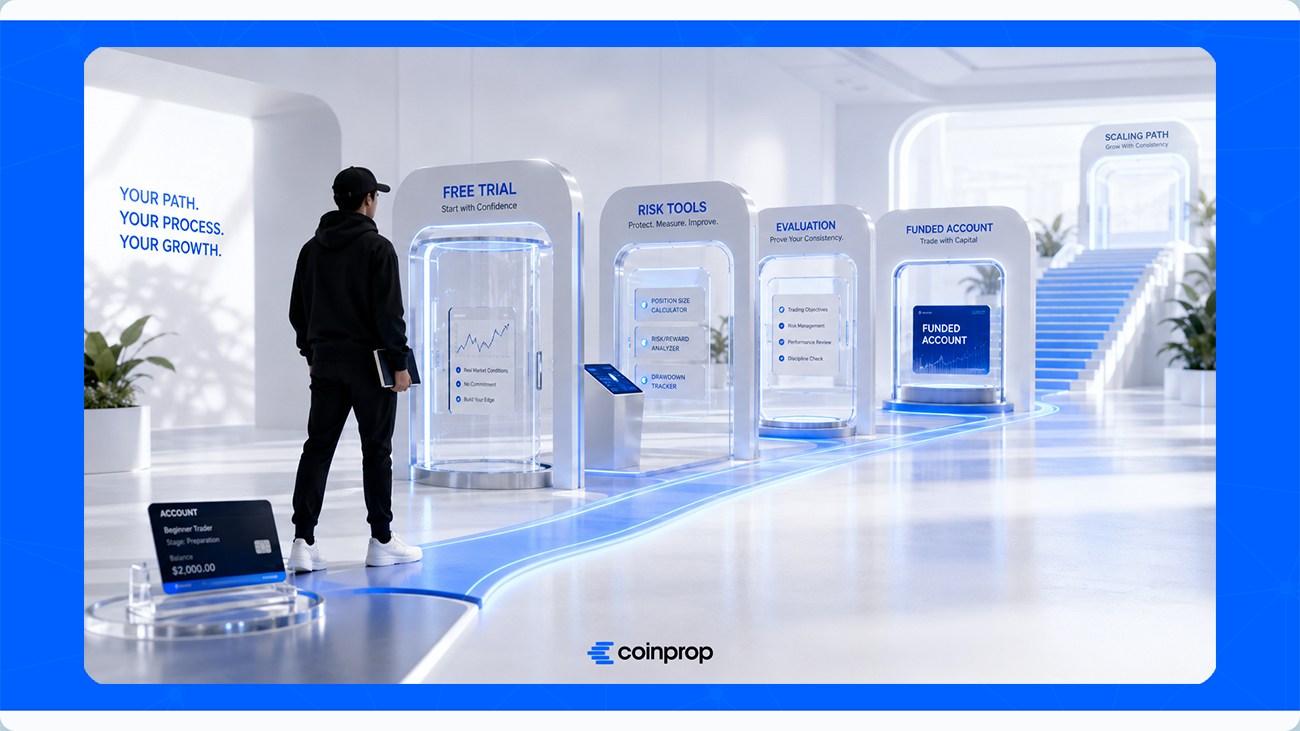
CoinProp is designed with a different philosophy. Instead of focusing on short-term excitement or unrealistic expectations, the platform emphasizes structured growth, disciplined trading behavior, and long-term trader development. The goal is to create an environment where beginners can learn, improve, and eventually operate like consistent funded traders.
This approach is based on a simple idea: traders are more likely to succeed when the system they operate in rewards consistency, risk control, and patience rather than excessive risk-taking or rushed performance.
Transparency is one of the most important foundations of a beginner-friendly crypto prop firm. Traders should always understand exactly what is required to pass an evaluation and maintain a funded account.
CoinProp is designed with clear and straightforward rules that remove unnecessary confusion from the trading process. Profit targets, drawdown limits, and evaluation conditions are presented in a way that is easy to understand and apply in real trading situations.
This level of clarity allows traders to focus on execution rather than interpretation. When rules are transparent, traders can make better decisions and avoid unexpected violations that are often caused by misunderstanding rather than poor performance.
A free trial is an essential feature for beginners who want to understand a prop firm’s environment before committing real capital.
CoinProp provides free trial access to allow traders to explore the platform, test their strategies, and become familiar with the evaluation structure without financial pressure. This helps reduce uncertainty and gives traders the opportunity to learn how the system works in a realistic setting.
By practicing in a risk-free environment, beginners can identify weaknesses in their approach, refine their strategy, and build confidence before entering a paid challenge. This leads to better preparation and more informed decision-making.
Risk management is one of the most important factors in long-term trading success. Many beginner traders fail not because of poor strategy, but because of inconsistent position sizing and lack of structured risk control.
CoinProp is designed to support disciplined trading by encouraging the use of structured risk management practices. Tools such as position sizing guidance, risk-reward analysis, and performance tracking help traders maintain consistency in their decision-making.
These tools reduce emotional trading and help traders stay aligned with their overall strategy, especially during periods of volatility or drawdown.
Unlike traditional prop firms that have adapted from legacy financial markets, CoinProp is built specifically for crypto trading environments.
This means the platform is designed with the unique characteristics of crypto markets in mind, including higher volatility, 24/7 market access, and fast-moving price action. Traders are not forced into outdated structures that do not match how crypto markets actually behave.
A crypto-native environment allows for more relevant trading conditions and a more realistic evaluation of trader performance within the asset class they are actually trading.
Many trading platforms rely heavily on hype-driven messaging such as extreme leverage, instant funding promises, or unrealistic profit expectations. While these messages can attract attention, they often encourage behaviors that are not sustainable in the long term.
CoinProp is designed to move away from this mindset. The focus is on sustainable growth, consistent performance, and long-term trader development rather than short-term excitement.
This means rewarding disciplined behavior, encouraging proper risk management, and supporting traders as they build skills over time. The objective is not just to pass challenges, but to develop traders who can remain consistent after becoming funded.
CoinProp is structured around the idea that long-term success in trading comes from consistency, discipline, and proper risk management rather than aggressive marketing claims or short-term performance pressure.
By combining transparent rules, free trial access, built-in risk management tools, and a crypto-native environment, the platform aims to provide beginners with a more supportive path toward becoming consistent funded traders.
Choosing the best crypto prop firm for beginners is not about finding the highest leverage, the lowest challenge fee, or the fastest path to payouts. These features may look attractive at first, but they often lead traders toward short-term thinking and inconsistent performance.
What actually matters is whether a prop firm helps traders build the right habits from the beginning. The most important foundation of trading success is consistency, supported by disciplined risk management, realistic expectations, and a structured decision-making process.
A beginner-friendly crypto prop firm should encourage traders to focus on survival first, profitability second, and growth over time. When the trading environment is designed around clear rules, fair evaluation structures, and sustainable performance expectations, traders are far more likely to develop long-term success.
In the end, the best crypto prop firm is not the one that creates excitement or hype. It is the one that helps traders stay consistent, manage risk properly, and gradually evolve into disciplined and profitable market participants.
The best crypto prop firm for beginners is one that focuses on clear rules, realistic profit targets, reasonable drawdown limits, and long-term trader development rather than high leverage or aggressive marketing claims.
High leverage is not necessarily an advantage for beginners. While it can increase position size, it also increases risk and can lead to faster drawdowns or account failure if not managed properly.
Most beginners fail due to poor risk management, overleveraging, revenge trading, lack of a trading plan, and unrealistic expectations about how quickly profits can be made.
Yes, free trials are very useful for beginners because they allow traders to test strategies, understand the rules, and become familiar with the platform without risking money.
Beginners should evaluate profit targets, drawdown rules, consistency requirements, payout conditions, availability of free trials, and whether the firm supports risk management practices.
Some crypto prop firms provide or encourage tools such as position size calculators, risk-reward calculators, and trading journals, which help traders maintain discipline and consistency.
Consistency is one of the most important factors in prop trading. Firms prefer traders who follow a structured process and manage risk properly over those who take high risks for short-term gains.
Yes, beginners can succeed if they focus on learning proper risk management, follow a trading plan, avoid emotional trading, and choose a prop firm that supports long-term development.
