
Post-Trade Analysis for Crypto Prop Trading
Published
Post trade analysis is a must have habit for any serious prop trader chasing consistent growth. By digging into what really happened, you spot hidden patterns, sharpen your execution, and boost your results big time. Crypto traders especially love using a simple post-trade analysis template, grab a free downloadable PDF to stay organized without overcomplicating things.

- Post trade analysis prop trading review
- Prop Traders Need After Trade Analysis
- Post trade analysis template
- Toxic Profits vs. Healthy Losses, Lessons for Prop Traders
- Best Post Trade Analysis Software in Your Dashboard
- Turning Trade Analysis into Measurable Edge
- Measuring Your Edge After the Trade
- Stress-Testing Your Strategy Before It Breaks
- Accounting for the Silent Killer: Trading Costs
- The CoinProp Mindset: Review to Repeat What Works
- From After-Trade Analysis to Real Profits
- Master Analysis After a Trade, Essential Tips
- Common Questions About Trading Analysis
Post trade analysis prop trading review
A lot of traders think the moment a trade closes, profit or loss booked, ding sound and all, the job’s done. Time to hunt the next setup, right? Nope. In professional prop trading, that closed trade is just the raw material. The real difference between the guy who keeps blowing challenges and the one pulling consistent payouts lies in what happens in the minutes after the exit.
Picture this, you’ve just walked across a snow-covered field (the chart). If you never stop to look back at your footprints, you’ll never see where you slipped, took unnecessary detours, or could’ve cut straight to the goal. Post-trade analysis is exactly that, studying your own tracks.
At CoinProp, we’re not just trying to get you funded; we want you to stay funded. Crypto doesn’t mess around. If you don’t understand why you won, you can’t repeat it. If you don’t know why you lost, you’re guaranteed to do it again.
This article shows you how to dissect every trade like a pro, dodging pointless drawdown, forging bulletproof discipline, and turning hard lessons into actual cash.

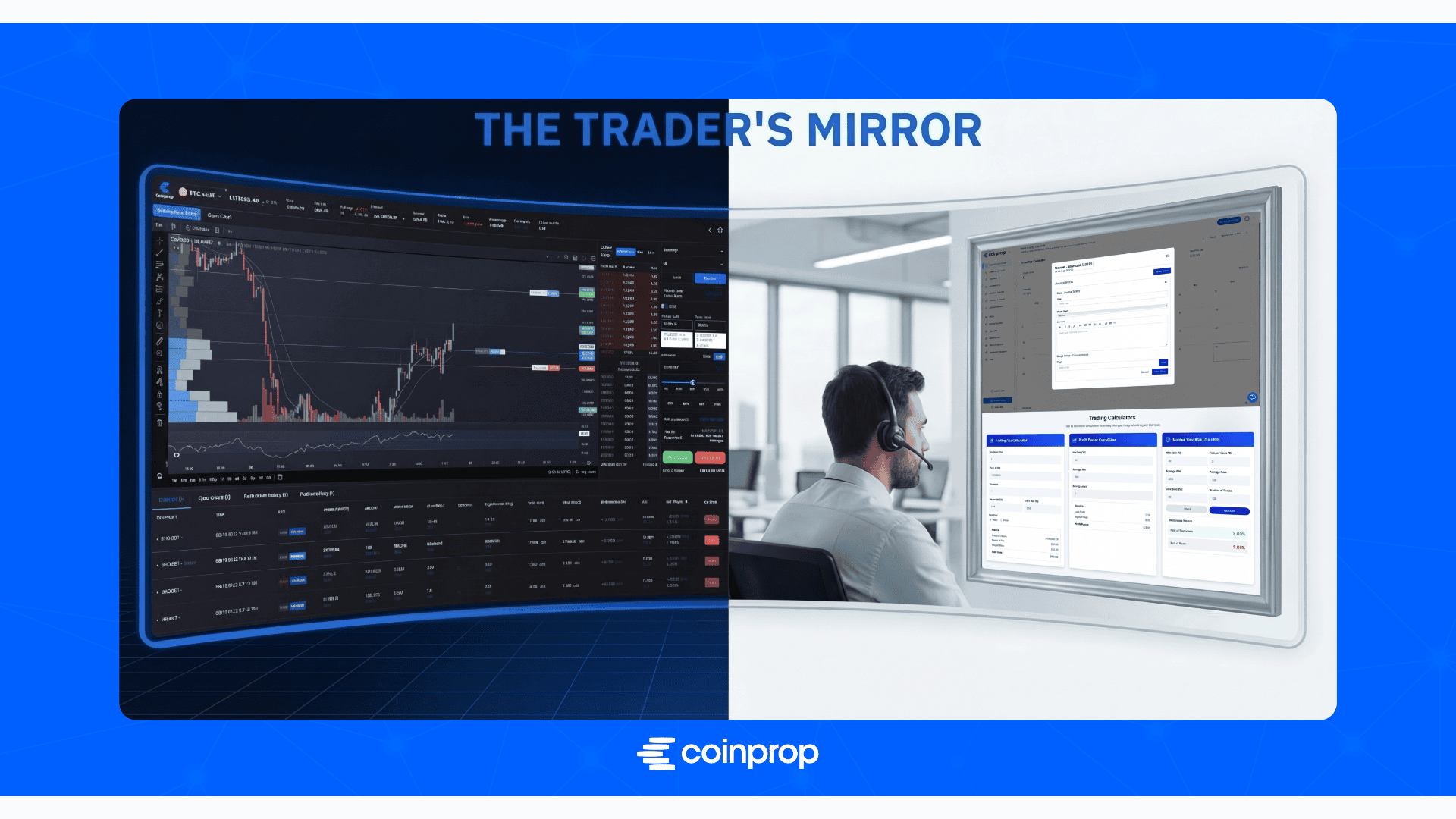
Crypto Trader’s Mirror for Smarter Decisions
Simple version, it’s rewatching the game tape after the final whistle.
The trader who immediately jumps to the next setup is like a driver barreling through thick fog without ever glancing in the rearview mirror. But real post-trade review is way more than just logging P&L.
It’s holding up a mirror to your decisions, emotions, and execution, spotting patterns, plugging leaks, and sharpening the edge that keeps your account alive and growing.
Really, post-trade analysis boils down to pulling real wisdom out of raw experience. When you dissect a trade, you're shining a light on the gap between what you planned and what actually went down.
This means asking the tough questions: Why did that stop get hit? Was it a flaw in the reversal strategy, or personal slippage, ignoring the plan and letting drawdown creep up?
This step pulls you out of operator mode and puts you in the seat of an impartial judge, grading your own performance.
Skip it, and you're doomed to repeat the same mistakes while hoping for different results (classic insanity). Embrace it, and every single trade, winner or loser, becomes a building block stacking up your equity curve higher.
Let’s Look at a Post-Trade Analysis Example
Imagine you're on a $50,000 funded account, shorting BTC/USDT. Price hits a liquidity zone, you spot RSI divergence, and with full confidence, you hit sell. Everything looks perfect.
Then boom, the rug pulls. Price explodes upward, tags your stop, and the trade closes for a $300 loss.
Most traders slam the laptop shut and move on. Pros? They roll into post-trade analysis in three critical steps.
Panel Data Check
Instead of raging or ignoring it, head straight to the Overview tab in CoinProp’s dashboard. You see that $300 hit ate about 0.6% of the account and a painful 12% of your daily drawdown allowance.
Dig into the Calendar: the trade opened just 5 minutes before a Fed speech. Classic, you got caught in news-driven volatility without realizing it.
Journal It
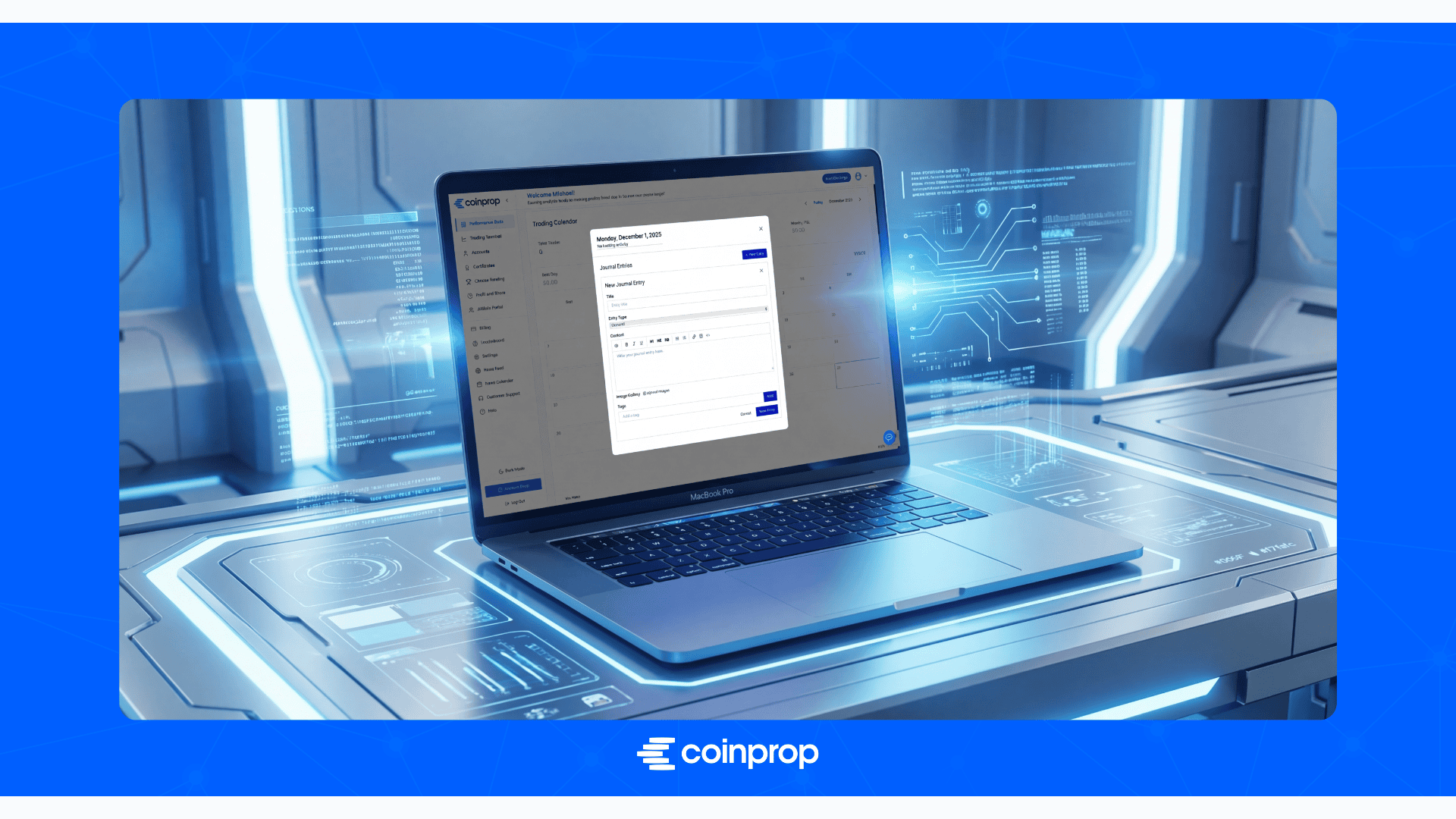
Upload a clean chart screenshot to your Trading Journal. Looking at it fresh, you spot the truth: the wick wasn’t fully swept yet, and price hadn’t truly committed. You jumped early, not from pure conviction, but straight-up FOMO, trying to get positioned before the “big news move.”
Journal note: Feeling at entry? Greed, not edge. I wanted in before the event spiked things.
Build the Fix
Now fill out the dissection table with concrete fixes:
1- Time Rule: No new trades 30 minutes before red folder news events.
2- Tool Rule: On high risk setups, use scale in, add position in parts for better average entry instead of going full size at once.
3- Discipline Rule: No reversal confirmation until a clear break of market structure (BMS). Period.
Outcome: Yeah, you dropped $300. But you built personal rules that prevent $3,000 hits down the line.
That’s the difference between a gambler and a funded pro. One loss, one upgrade, turning pain into a permanent edge. Every closed trade is tuition. Pay attention in class, and the market starts paying you back.
Prop Traders Need After Trade Analysis
In personal trading, a big loss might just sting your ego and wallet a bit. But in the prop world, one repeated mistake can wipe out the entire account. Post-trade analysis isn’t just a nice habit for prop traders, it’s a full-on defense system.
Daily Drawdown Control
The account killer in prop firms? Chain losses from the same dumb mistakes. If you close a loser and immediately hunt the next trade without reviewing, you’re likely repeating the exact error.
Post-trade review quickly shows whether the loss was market doing its thing or you breaking your own rules. Spot it fast, fix it, and you stop the bleed, keeping daily drawdown far from that dangerous 5% edge.
The Revenge Trading Cure
We’ve all been there: stop hit, blood boiling, and you jump back in bigger to “get even.” Forcing yourself to sit down and analyze that losing trade? It’s like dumping ice water on the rage.
That pause kicks your logical brain back online. Instead of revenge against the market, you focus on fixing what went wrong, no emotional spiral, just cold correction.
Optimizing Your PT:DD Ratio
At CoinProp, the endgame is consistent profits and actual withdrawals. A trader who reviews every trade (winners too) starts spotting tweaks, maybe using partial exits in the CPX dashboard to lock more profit, or better sizing to cut risk without hurting reward.
Over time, this sharpens your profit to drawdown ratio, marking you as the stable, professional trader firms love to keep funding, and paying.
In prop accounts, it’s not enough to just know how to trade. You’ve got to master managing (and learning from) your mistakes. The market always serves up fresh opportunities, but only if your account’s still breathing. Post trade analysis is the lifeline that keeps it alive through crypto’s wildest storms.
Post trade analysis template
To turn your review from a quick glance into real science, interrogate yourself like a detective. After every trade, win or lose, put these three big questions on the table:
Trading Strategy Check
First up: how well did you follow your roadmap?
When you hit that entry button, were all your reversal confirmations truly there (RSI divergence, liquidity sweep, etc.)?
Or did price just twitch a bit and FOMO kicked in, making you chase?
Even if the trade closed green but broke your rules, that’s toxic profit, it feels good now but trains bad habits that’ll kill you long term.
Tools & Execution Check
Tools & Execution Check Grade yourself on how you leveraged the platform:
- Reverse Button: When the market flipped, did you swallow pride and reverse the position to turn a loser into a winner, instead of stubborn averaging down?
- Scale-In: If price went against you early, did you add logically with calculated size, or panic and throw in suicidal lots?
To review these execution metrics flawlessly without switching between disconnected apps, top professionals filter for crypto prop firms with TradingView integration to log, track, and dissect every candlestick interaction directly on the live chart. When in profit, did you use partial exits in the CPX dashboard to lock in pieces early to make the trade free-risk (house money), or ride it all hoping for the moon?
Context & Timing Check
So many traders jump in during dead hours with thin liquidity and get chopped up for no reason.
Was your trade during peak sessions (London/New York overlap) or when crypto was just ranging sideways with no real flow?
Check if sudden news spiked the move, or was it pure technical?
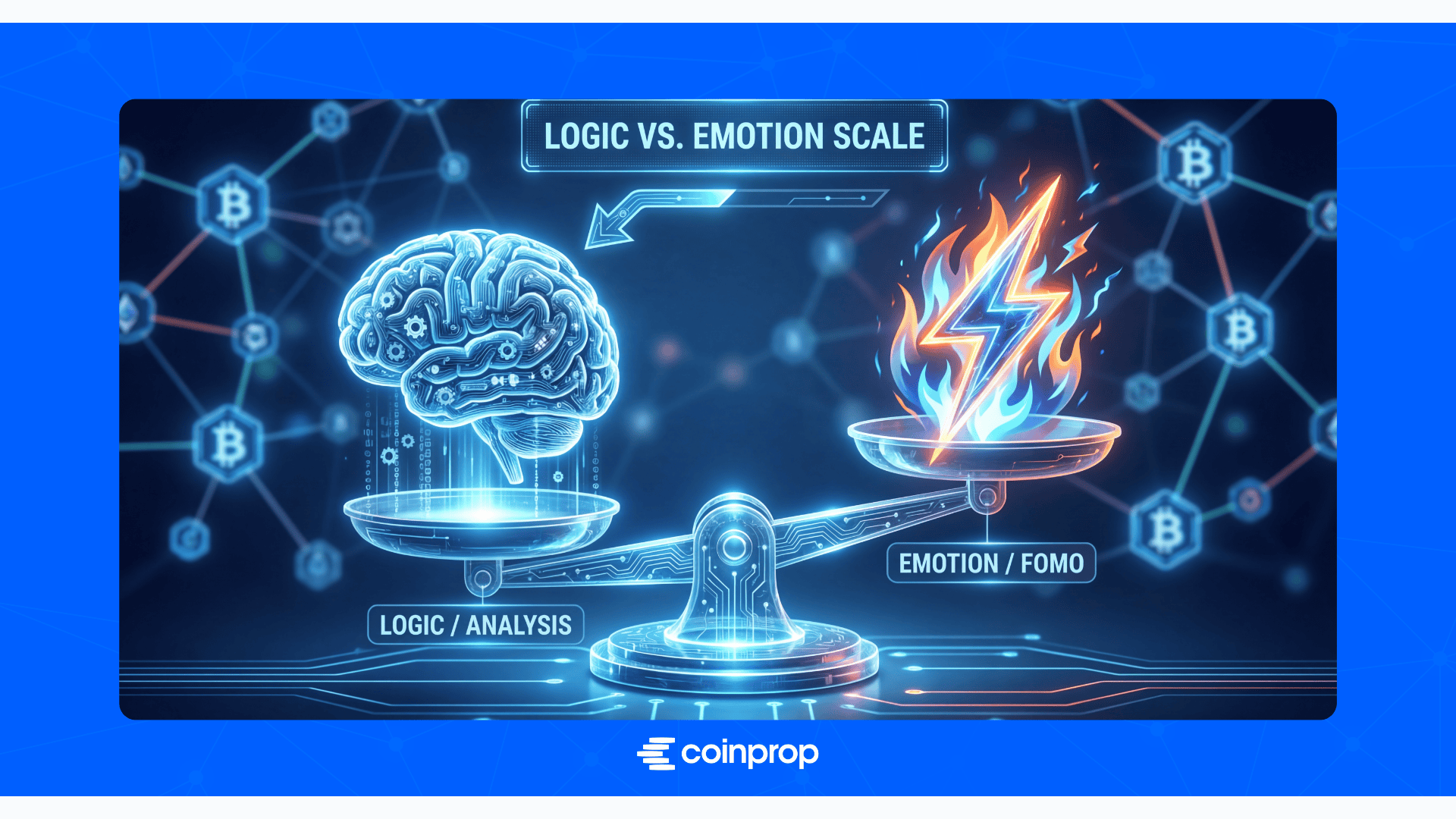
A pro trader isn’t someone who never screws up. It’s the one who replays the tape and pinpoints the exact second they took their foot off the logic pedal and slammed the emotion one.

Toxic Profits vs. Healthy Losses, Lessons for Prop Traders
In post trade analysis, one of the toughest mindset shifts is realizing success isn’t just green numbers and failure isn’t just red ones. In professional prop trading, we flip the script with a concept that’ll change how you look at your P&L forever.
What’s a Toxic Profit?
Picture this: you jump into a trade on pure hype, no real analysis, buying right at the top of a spike. Luck smiles, price ticks a bit higher, and you exit with a quick gain. Balance up, feels great, right?
Wrong. That’s toxic profit.
Why toxic? You broke your rules, and the market randomly rewarded bad behavior. It’s a trap: next time, you repeat the same sloppy entry expecting another gift. But eventually, the market bites back hard, turning that “win” into a chain of blowups that nukes your challenge account.
What’s a Healthy Loss?
Now flip it: you follow your reversal strategy to the letter, all confirmations lined up, risk managed perfectly, position sized right. Then bam, a surprise news event hunts your stop.
That’s a healthy loss.
Why healthy? You traded like a disciplined machine. This is just the cost of doing business. Traders who rack up healthy losses are the ones who win long-term, their system is repeatable, reliable, and built to survive.
How Analysis Spots the Difference
When reviewing, ask yourself, If this exact setup happened 100 more times and I traded it the same way, would I end up rich or broke?
If the honest answer is broke, treat that green trade like a flashing red warning.
If it’s rich, wear that red trade like a badge, head high, straight to the next setup.
Best Post Trade Analysis Software in Your Dashboard
Post-trade analysis shouldn’t feel like a chore, that’s why we’ve turned the dashboard into a full-blown analysis powerhouse. You’ve got direct access to the Performance Stats tab, which basically acts as your personal private coach.
Trading Metrics to Measure True Performance
This is like a detailed blood test for your trading health, everything critical laid out clear as day:
Balance & Equity History: See how smooth (or choppy) your account growth curve really is.
Win Rate: What percentage of your reversal predictions actually played out?
Average Winning vs. Losing Days: This reveals if your winners are truly outpacing losers in dollar terms (your real R:R in action).
Discipline Tracker for Crypto Traders
A lot of traders perform better on certain days, like Mondays when crypto wakes up fresh. The Calendar breaks it down day by day, showing where your focus was sharpest and when the market played nice (or didn’t).
Crypto Trader’s Edge Journal
This is where CoinProp stands head and shoulders above other firms. You get a dedicated journaling panel packed with features:
Categorized Journals: Sort entries into daily overviews (big picture day recaps), general notes, or even single trade deep dives, so you can dissect every reversal trade on its own.
Uploading Chart Screenshots: One of the most powerful parts of review is seeing the chart exactly as it looked when you traded. In the dashboard, you can upload screenshots of your entry and exit points, keeping that direct link between the visual setup and how you felt in the heat of the moment.
Psychological Aspect of Journaling
Panel stats give you the cold numbers, but only you can capture the feelings. A quick emotion note next to the data works wonders.
Example entry: When price dipped further instead of reversing, my hand hovered over the Reverse button, I hesitated too long out of fear.
That single line reveals the real issue wasn’t strategy, it was fear freezing you up.
Analyzing Reaction Speed with Dashboard Tools
A big review angle: did you actually use the platform’s power properly?
Partial Exits: Did you lock in pieces early to protect profits, or did greed keep the full position open until it flipped to a loss?
Replaying these in the panel shows exactly where you nailed execution, or where hesitation cost you.
A prop trader skipping the Trading Journal is like driving at night with headlights off, crashing eventually. But with Coinprop’s built in specialized journaling tied directly to your trades, you’re building a stronger version of yourself every single day.
Turning Trade Analysis into Measurable Edge
Post-trade analysis isn’t just about journaling screenshots or tagging trades as win or loss. For serious crypto prop traders, the real value comes from translating execution data into measurable performance metrics.
At CoinProp, we look at every closed trade as raw data. Once emotions are out of the picture, numbers tell the truth. This is where structured tools turn post-trade review into a competitive advantage.
Measuring Your Edge After the Trade
Expectancy & Profit Factor in Real Trading
After reviewing execution quality, entries, exits, and discipline, the next step is answering a critical question:
Does this strategy actually have an edge over time?
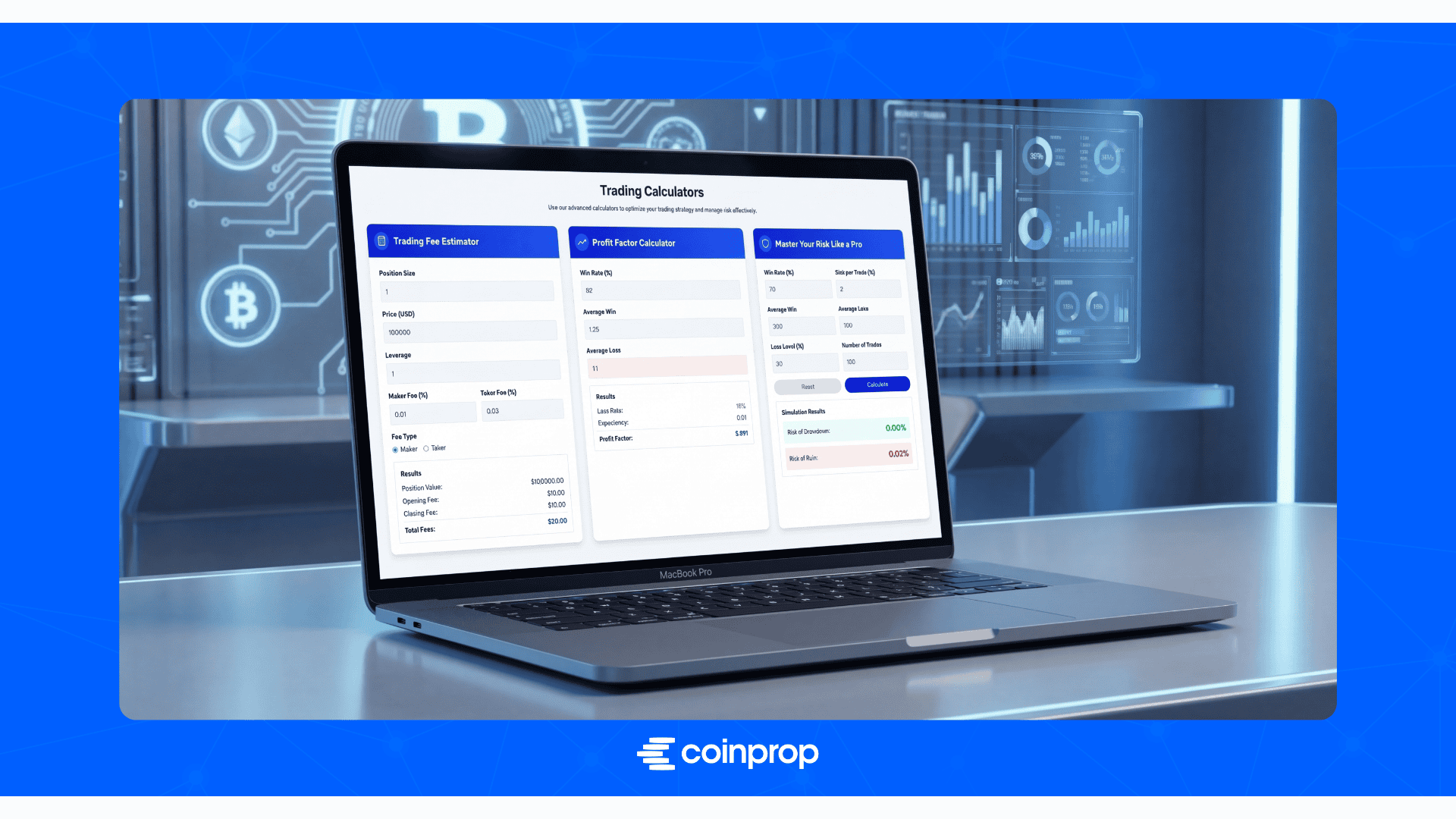
This is where expectancy and profit factor become essential components of post-trade analysis:
Expectancy shows the average amount you can expect to make or lose per trade over a large sample size.
Profit Factor compares total gains to total losses. Anything above 1 indicates a profitable system, but higher values reflect stronger efficiency.
Instead of guessing whether your strategy “feels good,” CoinProp encourages traders to quantify performance using clear, transparent formulas. When expectancy is positive and profit factor is healthy, you know your edge is real, not imagined.
By inputting:
1- your Win rate
2- Average winning trade
3- Average losing trade
you can objectively evaluate whether your post-trade data supports long-term profitability or exposes structural weaknesses.
For prop traders facing strict drawdown rules, this clarity is non-negotiable.
Stress-Testing Your Strategy Before It Breaks
Monte Carlo Risk Simulation for Prop Traders
Post-trade analysis doesn’t stop at past performance. Professionals also ask:
What happens if this same behavior repeats under pressure?
Monte Carlo simulations allow CoinProp traders to project thousands of possible equity paths based on real trade statistics. This transforms historical review into forward-looking risk awareness.
Using inputs like:
1- Win rate
2- Average win versus loss
3- Risk per trade
4- Number of trades
5- Maximum acceptable drawdown
traders can estimate:
Risk of Drawdown: the probability of hitting a meaningful equity decline.
Risk of Ruin: the chance the strategy becomes mathematically unsustainable.
This step is crucial in prop trading, where survival matters more than single wins. A strategy that looks profitable but carries high ruin risk will eventually violate rules. Monte Carlo analysis exposes that early, while adjustments are still possible.
At CoinProp, staying funded means understanding not just how you trade, but how your strategy behaves over time.
Accounting for the Silent Killer: Trading Costs
Trading costs are often invisible during execution but decisive in long-term performance. Ignoring fees in trade reviews can quietly turn solid strategies into losing systems.
Fee Awareness in Post-Trade Review
Many traders analyze entries and exits in detail, then completely ignore fees. In crypto prop trading, this is a costly mistake.
Post-trade analysis should always include transaction costs, especially when leverage or frequent execution is involved.
By estimating fees based on:
Position size
Entry price
Leverage
Maker or taker execution
traders can see how costs impact net performance, not just gross PnL. This helps identify situations where:
A profitable setup can quickly become marginal once fees are accounted for, while high leverage often inflates trade size without actually improving efficiency. At the same time, poor execution style can quietly erode overall expectancy. Professional traders understand that risk management isn’t limited to charts alone, they control risk at the cost level as well.
The CoinProp Mindset: Review to Repeat What Works
At CoinProp, post-trade analysis isn’t about self-criticism. It’s about refinement.
If you don’t understand why a trade worked, you can’t repeat it.
If you don’t understand why it failed, you’ll relive it.
By combining execution review with expectancy analysis, risk simulation, and cost awareness, traders turn each closed position into a lesson that compounds over time.
This is how disciplined crypto prop traders reduce drawdown, protect capital, and build consistency that lasts.
From After-Trade Analysis to Real Profits
Post trade analysis is worthless if it doesn’t lead to actual behavior shifts. It’s not just reminiscing, it’s mining data from Performance Stats and your Trading Journal notes to build concrete rules for your next trades.
Crypto Trading Plan, Aligning with Reality
If journaling with chart uploads shows most of your reversal stops got hit because you entered too early (before RSI confirmation), add a hard rule: “No entry button until divergence confirms on the lower timeframe.”
That’s turning review into real money, plugging the leak that’s been draining your account.
Drawdown Driven Sizing Adjustments
If the Overview tab reveals your losing days are racking up big dollar hits, you’re probably oversizing positions.
Your action plan output: Cut trade size by 30% until the equity curve flips back bullish.
No ego, just math protecting your daily drawdown buffer and keeping the account alive longer.
Partial Exits or Full? How to Decide
Review isn’t only about fixing losers. Spot the trades where you made the most with the least stress. If using Partial Exits in the CPX dashboard kept you calm and locked in steady gains, make that your signature move, bake it into every setup.
Good Review Can Save Your Crypto Trades
Ultimately, crushing challenges and hitting big payouts goes to traders who are straight with themselves. Crypto markets are a perfect mirror of your character.
When you invest time journaling in the dedicated panel, you’re proving to the market (and the firm) that you respect the capital they’ve entrusted you with.
Remember: One bad trade can be fixed with one good review, but one bad trade ignored is the start of your account’s downfall.
Starting today: close the trade, hit the Performance Stats tab, and let the numbers talk. Listen, adjust, repeat. That’s how you turn analysis into action, and action into consistent, scalable profits.
Master Analysis After a Trade, Essential Tips
Here's a simple breakdown of what to look for in your reviews. Use this as a guide to score yourself and plan fixes or reinforcements.
Entry Discipline
Example status: Entered too early before full confirmation.
Score (1-5):
Action plan: Wait for the 1-minute confirmation candle to fully close before pulling the trigger.
Timing & Session
Example status: Traded during slow, ranging hours (like 1 PM UTC).
Score (1-5):
Action plan: Stick to high-liquidity sessions only, like London/New York overlap.
Drawdown Management
Example status: Risked 3% of the account on a single position.
Score (1-5):
Action plan: Cut initial size in half and only scale in once confirmation hits.
CPX Tool Usage
Example status: Forgot to take partial exits.
Score (1-5):
Action plan: Hit the Partial Exit button the second Target 1 gets reached.
Exit Quality
Example status: Bailed early out of fear before hitting the target.
Score (1-5):
Action plan: Move the stop to breakeven as soon as you're in profit and let it breathe.
Psychological State
Example status: Heart racing with high stress during the trade.
Score (1-5):
Action plan: Drop position size until a potential loss doesn't faze you at all.
Alignment with Stats
Example status: Normal system stop, nothing wrong, just part of the edge.
Score (1-5):
Action plan: Stay loyal to the plan; this loss is just win-rate math playing out.
Profit/Loss Type
Example status: Toxic profit (got lucky while breaking rules).
Score (1-5):
Action plan: Call myself out for the rule break and double-check everything on the next trade.
Fill this out honestly after every session. Low scores highlight fixes; high ones show what to keep doing. It's your roadmap to tighter discipline and better results in prop trading.
Common Questions About Trading Analysis
1. Why bother reviewing a winning trade?
Not every profit comes from skill. Sometimes the market rewards mistakes (toxic profits). Reviewing winners helps you figure out if you truly followed your reversal strategy or just got lucky. Repeating random wins eventually blows up accounts, consistent review keeps you honest and repeatable.
2. How does the Performance Stats section help my analysis?
It swaps guesswork for hard numbers. For example, if your average losing days outpace winners in dollars, you’ve got a drawdown management issue. These stats pinpoint exactly where your trading behavior needs fixing, no vague feelings, just clear data.
3. Is uploading chart screenshots to the Trading Journal really necessary?
Absolutely, 100%. Visual memory beats numbers every time. A month later, seeing that screenshot of your bad entry burns the mistake into your brain, making you way less likely to repeat it live.
4. What should I look for in the Calendar section?
It reveals your personal “time signature.” You might spot most losses hitting on Mondays, meaning your reversal strategy doesn’t vibe with early-week markets. Solution: sit out those days and just observe.
5. If I spot a “toxic profit” (rule-breaking win) in review, what now?
Log it honestly and flag it as a warning. Don’t count it as real progress, the behavior behind it could torch your funded account next time. Discipline means getting mad at bad wins, not just celebrating any green.
6. How much time should I spend on post-trade analysis?
It doesn’t need hours. Filling the dissection table and jotting a couple lines in journal takes about 5 minutes per trade. Those 5 minutes? That’s the gap between amateur blowups and pro funded traders.
7. How does the PT:DD ratio in Overview affect my future trades?
If it’s below 0.5, you’re risking too much for the reward, unsustainable long-term. Post-trade review helps you optimize entries and use tools like Partial Exits to push that ratio above 0.75, the safe zone for real pros.
Learning how a crypto prop firm operates can provide valuable context when comparing different trading programs and evaluation models.